Best Ground Bee Killer: Dusts, Foams and Safer Alternatives
Honey Garage is reader-supported. As an Amazon Associate we earn from qualifying purchases, at no extra cost to you. Read our affiliate disclosure.
If small holes with little mounds of soil have appeared in your lawn and bees are flying low over them, you probably have ground-nesting bees. Before you reach for a ground bee killer, check what you are dealing with. True ground bees are gentle, rarely sting and are gone within a few weeks. The insects that really need treating are usually ground-nesting yellowjackets, which are wasps.
This guide shows how to tell them apart and when to leave them alone. For nests that do need to go, it covers which insecticide dusts and foams work and how to use them safely.
Ground bees or yellowjackets?
| Ground-nesting bees | Ground-nesting yellowjackets | |
|---|---|---|
| Look | Fuzzy, often dark or dull brown, small to honey bee size | Smooth, shiny, bright yellow and black bands, narrow waist |
| Nest entrance | Many single pencil-sized holes, each with a small mound of soil | One larger hole with heavy traffic in and out |
| Social? | Solitary: each female digs her own burrow, often many side by side | One colony of hundreds to thousands of wasps |
| When | Early spring, for about 3–6 weeks | Grows all summer; largest and most aggressive in late summer and fall |
| Stinging | Males cannot sting; females rarely sting unless handled or stepped on | Defend the nest aggressively and can sting repeatedly |
| Should you treat? | Usually no; they are important pollinators | Yes, if the nest is near people, pets or paths |
Common ground bees in North America include mining bees, sweat bees and cellophane bees. Our guide to types of bees shows how to identify them, and can bees have hives in the ground? explains how they nest.
Try this first: getting rid of ground bees without insecticide
Ground bees choose dry, bare, sunny soil. Change those conditions and they will nest elsewhere next year:
- Water the area. A thorough soaking every few days during their nesting weeks makes the soil unattractive. Many people find this alone moves them on.
- Thicken the lawn. Overseed and fertilize thin, patchy grass in fall. Dense turf leaves no bare soil to dig into.
- Cover bare patches with mulch, ground cover plants or landscape fabric.
- Wait it out. The nesting season is short. Keep children and pets off the patch for a few weeks, and the activity stops on its own.
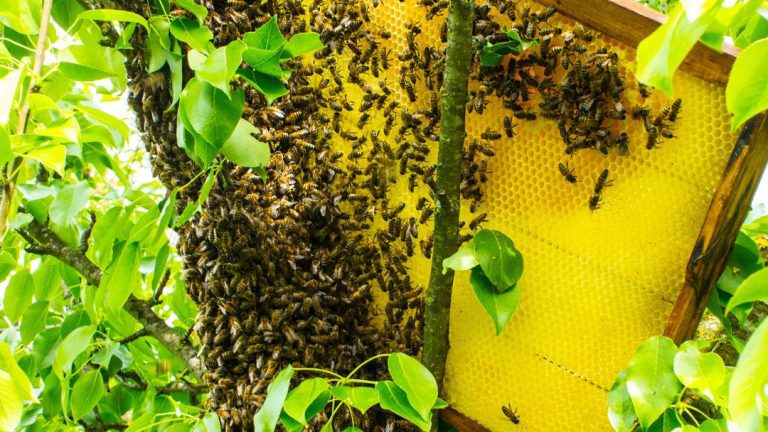
If you have a honey bee colony in the ground or in a wall, do not spray it. Call a local beekeeper or swarm removal service; many will remove the bees for little or nothing. If bees are just a nuisance around a patio, a bee and wasp repellent may be enough.
The best ground bee and yellowjacket killers
When a nest has to go, such as yellowjackets by a doorway, bees under a sandbox, or someone in the house with a sting allergy, these are the products that work. Always read and follow the label. It is the law for pesticides, and it tells you where and how the product can be used.
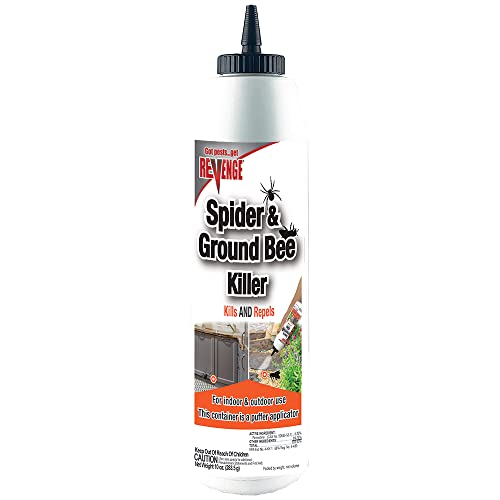
1. Bonide Revenge Spider & Ground Bee Killer Dust (best dust for ground nests)
The product most people mean by “ground bee killer”. It is a ready-to-use insecticide dust in a 10 oz puffer bottle, labeled for ground bees, wasps, spiders and other crawling insects, indoors and out. Puff it directly into each nest entrance at dusk. Insects returning to the nest pick it up and carry it inside. Check the label for the active ingredient and the sites where it can be used.
- Good: labeled specifically for ground bees; easy puffer application; one bottle treats many holes.
- Watch for: each solitary ground bee hole is a separate nest; keep pets away until the dust settles.
2. Spectracide Carpenter Bee & Ground-Nesting Yellowjacket Killer Foam (best for yellowjacket nests)
An aerosol foam with an extension tube, labeled for ground-nesting yellowjackets and carpenter bee tunnels. The foam expands to fill the burrow and kills on contact. Its active ingredients are prallethrin, for fast knockdown, and lambda-cyhalothrin, for residual control. It is useful for a busy yellowjacket entrance where you want to stay at arm’s length.
- Good: fast knockdown; extension tube lets you keep your distance; also treats carpenter bee holes.
- Watch for: aerosol, so it treats one entrance at a time; follow the label closely around pets and plants.
3. Raid Outdoor Ground Nest Wasp & Insect Killer Dust (best for large or recurring nests)
A 24 oz waterproof insecticide dust for outdoor ground nests and perimeter treatment around buildings. Raid says it keeps working for up to eight months and recommends applying it in the evening, when insects have returned to the nest. The larger container suits properties with several nests or yearly problems.
- Good: large container; weather-resistant residual; also a perimeter treatment for crawling insects.
- Watch for: long residual means extra care around pets, vegetable gardens and flowering plants.
How to treat a ground nest safely
- Find every entrance in daylight from a safe distance, and mark them with a flag or stick.
- Treat at dusk or after dark, when the insects are inside and less active. Use a flashlight with a red filter; yellowjackets fly toward white light.
- Wear protection: long sleeves, long pants tucked into socks, gloves and ideally a veil.
- Apply directly into the entrance, dust puffed in or foam sprayed in with the extension tube, then walk away. Do not block the hole; returning insects carry the product inside.
- Check the next evening and re-treat if there is still traffic.
- Keep children and pets away from treated areas as the label directs. Do not apply to lawns or plants in bloom, where honey bees and other pollinators forage.
Never pour gasoline or other fuels into a nest. It contaminates soil and groundwater, is a serious fire risk and is illegal in many places. For large yellowjacket nests, nests inside walls, or anyone with a known sting allergy, call a licensed pest control professional.
Frequently asked questions
Do ground bees sting?
Rarely. Male ground bees, which do most of the hovering and patrolling, have no stinger. Females can sting but almost never do unless they are trapped, handled or stepped on barefoot. If you are being chased or stung near a ground nest, it is almost certainly yellowjackets.
What kills ground bees instantly?
Foaming aerosols sprayed into the entrance knock down insects on contact, and insecticide dusts puffed into the hole work within a day or so as the insects carry the dust through the nest. With solitary ground bees, each hole is a separate nest, so you would have to treat every hole. That is another reason non-chemical methods usually make more sense for them.
How long do ground bees stay?
Most ground-nesting bees are active above ground for about three to six weeks in spring. The next generation develops underground and does not emerge until the following spring. They may return to the same spot if conditions stay dry and bare.
Are ground bee killers safe for pets?
Only when used exactly as the label directs. Keep pets and children away until dusts have settled or sprays have dried, or for the time the label specifies, and store products out of reach. If a pet eats or rolls in a pesticide, call your vet or an animal poison control line.
Will vinegar kill ground bees?
Pouring vinegar into holes is a popular home remedy, but it is unreliable and can damage your lawn. Watering the area regularly and thickening the grass are more effective ways to discourage ground bees without harming them.
Stung already? See our guides to bee stings and the best bee sting relief, or what to do when a bee stings your dog.