
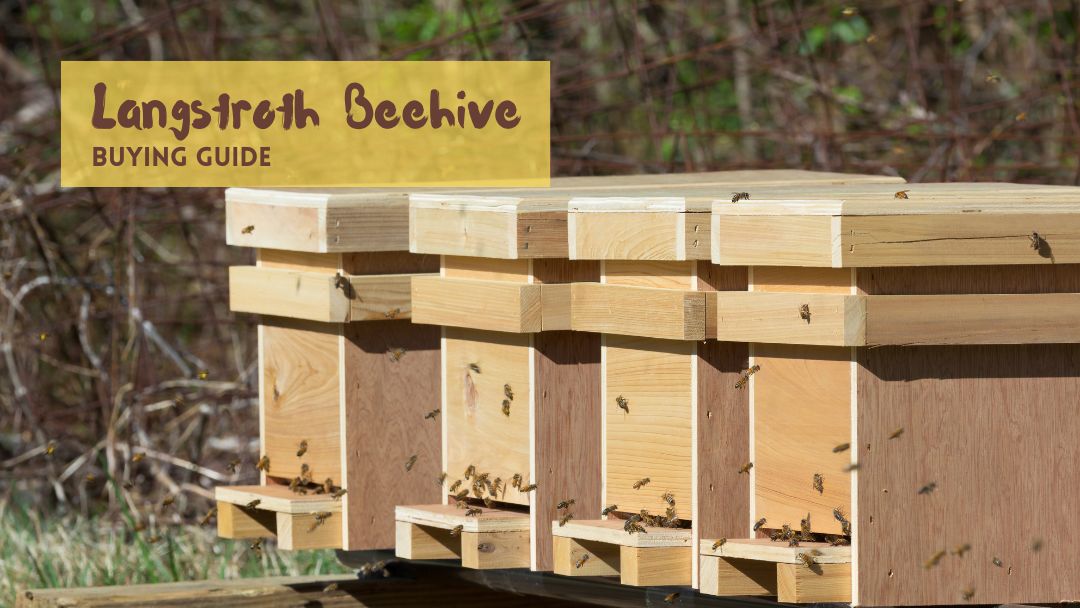
The Langstroth Hive: How It Works, Sizes and the Best Setups to Buy
This page may contain affiliate links. As an Amazon Associate, we earn from qualifying purchases, at no additional cost to you.
A Langstroth hive is the stacked, rectangular wooden beehive you see in most backyards and nearly every commercial apiary. It is a set of open-ended boxes that hold removable wooden frames, spaced so the bees build their comb inside the frames and not across them. That one detail lets you lift out any frame, check the brood or take honey, and put it back without tearing the colony apart.
Quick answer: for most beginners, the best Langstroth setup is a 10-frame hive with two deep boxes for the bees and at least one medium box for honey. The Hoover Hives Original kit gives you exactly that in one box. If you want a lighter, simpler hive, run all medium boxes, or choose the 8-frame width.
How a Langstroth hive works
The Reverend Lorenzo Lorraine Langstroth, a Pennsylvania-born minister and beekeeper, received US Patent No. 9,300 for his movable-frame hive on October 5, 1852. The idea behind it is called bee space. Langstroth noticed that bees leave a gap of roughly 1/4 to 3/8 inch open as a walkway. Make a gap smaller and they seal it with propolis. Make it bigger and they fill it with comb.
So he built a hive where every frame hangs with a bee space between it and the box walls, the next frame and the box above. The bees build comb inside each frame and leave the gaps alone. Before this, comb was glued to the walls of skeps and boxes, and harvesting meant cutting it out. Our short history of the Langstroth hive covers the story in more detail.
The second big idea is that the hive grows upward. The queen lays eggs in the lower boxes (the brood chamber), and the bees store surplus honey above. When the colony runs out of room, you add another box on top. At the end of the season you take the honey boxes off and leave the bees their own stores below.
Parts of a Langstroth hive, from bottom to top
Every Langstroth hive is built from the same stack of parts. For a more detailed tour, see our guide to the parts of a beehive.
- Hive stand: raises the hive off the ground, keeping the wood dry and making skunks work harder. Most beekeepers aim for 16–18 in. See the best hive stands.
- Bottom board: the floor of the hive, with the entrance at the front. It is either solid wood or a screened board with mesh for ventilation. We compare the two in screened vs solid bottom boards.
- Entrance reducer: a notched wooden strip that narrows the entrance, so a small or new colony can defend itself from robbers and cold.
- Brood boxes (hive bodies): usually one or two deep boxes where the queen lays and the colony lives.
- Queen excluder (optional): a grid the workers can pass through but the larger queen cannot, which keeps eggs out of the honey boxes. Plenty of beekeepers skip it. See queen excluders for both sides.
- Honey supers: medium or shallow boxes above the brood, where the bees store the honey you harvest.
- Frames and foundation: the removable wooden or plastic frames that hang in every box, usually fitted with a wax or plastic foundation sheet printed with the cell pattern.
- Inner cover: a flat board with a center hole that sits on the top box, giving an insulating air gap and a place to put a feeder.
- Telescoping outer cover: the roof. It overhangs the sides by an inch or two and is often topped with galvanized metal to shed rain.
Langstroth hive dimensions
All Langstroth boxes of one width share the same length and width, so deeps, mediums and shallows stack in any order. Only the height changes. Makers vary by 1/8 in or so.
| Box | Box height | Frame height | Typical use | Rough weight when full (10-frame) |
|---|---|---|---|---|
| Deep (hive body) | 9 5/8 in | 9 1/8 in | Brood chamber | 80–90 lb |
| Medium (Illinois super) | 6 5/8 in | 6 1/4 in | Honey, or brood in all-medium hives | 50–60 lb |
| Shallow | 5 11/16 in | 5 3/8 in | Honey, comb honey | 35–45 lb |
| Width | Outside length | Outside width | Frames per box |
|---|---|---|---|
| 10-frame | 19 7/8 in | 16 1/4 in | 10 (many beekeepers run 9 in honey supers) |
| 8-frame | 19 7/8 in | About 13 3/4–14 in | 8 |
| 5-frame nuc | 19 7/8 in | About 9 1/4 in | 5 |
Frames are the same length in 8- and 10-frame hives (the top bar is 19 in), so frames swap freely between the two widths. Boxes, covers, bottom boards and excluders do not. A 5-frame nuc box takes the same frames, so nucs move straight into a full hive.
8-frame vs 10-frame Langstroth hives
The 10-frame hive is the industry standard. Local suppliers stock it and mentors will have spare boxes. The 8-frame hive is simply a narrower version. A full 8-frame deep weighs roughly 60–70 lb against 80–90 lb for a 10-frame deep, and in winter the colony’s cluster fits the narrower box well.
The trade-off is height. An 8-frame colony needs more boxes to hold the same number of bees and honey, so the hive gets taller and you lift more boxes to reach the bottom. Pick one width and stay with it, because the boxes will not stack on each other. If you have no strong reason either way, choose 10-frame.
All-medium Langstroth setups
The classic setup is two deeps for brood and mediums for honey. Many hobby beekeepers now run every box as a medium: three mediums for the brood area and more mediums for honey.
- Lighter lifts: no box ever weighs more than about 60 lb, even full of honey.
- One frame size: any frame fits any box, so you can move a frame of brood or honey anywhere in the hive.
- The catch: you buy more boxes and frames, the brood nest is split across more gaps, and most nucs are sold on deep frames, so you need a deep or a conversion plan to start one.
Langstroth hive pros and cons
| Pros | Cons |
|---|---|
| Standard sizes, so parts, frames and nucs are easy to find | Full boxes are heavy, especially 10-frame deeps |
| Every frame is removable for inspections and mite checks | Inspections mean taking the hive apart box by box |
| Expands easily: just add another box | The colony is disturbed more than in a top bar hive |
| Frames go straight into an extractor, and the comb is reused | You need an extractor or a crush-and-strain setup to harvest |
| Almost every book, course and mentor teaches on it | Wooden boxes need wax or paint to last outdoors |
| Built for honey: supers go on and come off in minutes | Up-front cost is higher once you add supers |
If lifting is the dealbreaker, look at the alternatives on our beehive types page, including top bar and Warré hives. The Flow Hive is also a Langstroth-sized hive, but with special honey frames that drain from a tap. Harvesting is easier; the brood care is the same.
Which Langstroth hive should you buy?
If you want a hive plus suit and tools in one order, our beehive starter kit guide compares complete kits. The picks below focus on the hive: how many boxes you get, the wood and finish, and how much assembly is involved.
| Hive | Format | Boxes | Finish | Assembly | Best for |
|---|---|---|---|---|---|
| Hoover Hives Original Kit | 10-frame | 2 deep, 1 medium | Beeswax-coated | Flat-pack, pre-drilled | A full first-year hive |
| Hoover Hives Deep + Medium Kit | 10-frame | 1 deep, 1 medium | Beeswax-coated | Flat-pack, pre-drilled | Starting smaller with the same parts |
| Honey Keeper 20-Frame Kit | 10-frame | 1 deep, 1 medium | Solid wood | Check listing | Budget, with a metal-topped cover |
| CREWORKS 2-Layer with Windows | 10-frame | 1 deep, 1 medium | Beeswax-coated fir | Check listing | Watching the bees without opening up |
| BeeCastle 10-Frame Starter Kit | 10-frame | 1 deep | Wax-coated cedar | Box assembled | Hive, suit and tools together |
| Apimaye Insulated Nuc | 7-frame nuc | 1 insulated body | Insulated plastic, no paint | Assembled | Cold climates, splits, a second colony |
| Hoover Hives Assembled Deep | 10-frame | 1 deep | Beeswax-coated | Fully assembled | No-build single box |
In every kit the frames need some assembly or checking before use, so allow an evening. Our step-by-step guide to assembling a Langstroth beehive covers boxes and frames.
The best Langstroth hives and kits
1. Hoover Hives Original Beeswax-Coated Kit, 2 Deep + 1 Medium (best overall Langstroth hive)
This is the classic 10-frame Langstroth setup in one box: two deep brood boxes and one medium super, with wooden frames and heavy wax-coated foundation for all three. That is the standard first-year setup, so you will not be rushing to order boxes in early summer.
Everything is beeswax coated, so there is no painting. The boxes ship flat with pre-drilled holes and screws; allow an afternoon to build them.
- Good: Two deeps and a medium, frames and wax-coated foundation for every box, beeswax coated, pre-drilled with screws included
- Watch for: Needs assembly; no bottom-board details or tools listed beyond the woodenware, so check the parts list for the variant you order.
2. Hoover Hives 10-Frame Kit, 1 Deep + 1 Medium (best smaller starter hive)
The same Hoover woodenware in a smaller package: one deep brood box and one medium, with frames and wax-coated foundation. Start here and add a second deep later, or run a deep-and-medium brood nest.
It ships flat with pre-drilled holes and screws, needs no paint, and matches the Hoover add-on boxes further down this page.
- Good: Deep plus medium with frames and foundation, beeswax coated, pre-drilled, screws included, matches Hoover add-on boxes
- Watch for: Most colonies will need another box within a season; needs assembly.
3. Honey Keeper 20-Frame Beehive Kit, 1 Deep + 1 Medium (best budget two-box hive)
Honey Keeper’s kit is a long-running, well-reviewed way to get a complete two-box 10-frame hive. You get a solid wood deep and medium, ten deep and ten medium wooden frames with plastic foundation, a bottom board, an entrance reducer, a plastic queen excluder and a galvanized metal telescoping cover.
The metal-topped cover sheds rain and protects the lid. The listing does not say the boxes are wax-coated, so paint the outside if yours arrive bare.
- Good: Deep and medium with 20 frames, galvanized metal telescoping cover, queen excluder and entrance reducer included
- Watch for: The listing does not say the boxes are wax-coated, so plan to paint the outside; plastic excluder rather than metal.
4. CREWORKS 10-Frame 2-Layer Beehive with Acrylic Windows (best for watching the bees)
CREWORKS builds a standard deep-and-medium Langstroth hive with one difference: acrylic windows in the boxes. You can see how far the bees have drawn comb, or whether the super is filling, without pulling frames.
The boxes are beeswax-coated fir with pine frames and hand grips on three sides; the hive measures about 21.9 x 18.1 x 20.1 in.
- Good: Viewing windows, beeswax-coated fir boxes, pine frames, hand grips on three sides
- Watch for: Windows are a nice extra, not a replacement for regular inspections; one deep only, so add a second brood box as the colony grows.
5. BeeCastle 10-Frame Starter Kit (best hive with suit and tools)
If you have nothing yet, this BeeCastle kit gives you a Langstroth hive and the gear to work it. The wax-coated cedar deep arrives assembled, with a bottom board, telescoping and inner covers, queen excluder and entrance reducer, plus ten unassembled pine frames with black beeswaxed plastic foundation.
You also get a smoker, frame holder, tote, 19 other tools, and a free-size jacket, pants and leather gloves.
- Good: Assembled wax-coated cedar deep, full cover set, smoker and tools, jacket, pants and gloves
- Watch for: Only one deep box, so buy a second deep or medium before summer; the suit is one size.
6. Apimaye Insulated 7-Frame Langstroth Nuc Hive (best for cold climates and splits)
The Apimaye is an insulated plastic nucleus hive that takes seven Langstroth frames. It comes assembled, needs no painting and is designed to limit moisture. Apimaye says bees in its insulated hives use less honey over winter and build up faster in spring.
It is not a full-size hive, but it is an excellent second box for a nuc, a swarm, a split or a small colony overwintering in a cold region.
- Good: Insulated, assembled, no painting, moisture-limiting design, takes standard Langstroth frames
- Watch for: Seven frames only, so a strong colony will need moving into a full-size hive; costs more than a wooden nuc box.
7. Hoover Hives Assembled 10-Frame Deep (best no-build brood box)
This is a single Hoover Hives beeswax-coated 10-frame deep that arrives fully assembled. It suits anyone who already has a bottom board and covers.
Pair it with a nuc: set it on your bottom board, move the nuc frames in and fill the gaps. The listing title is short, so check what comes with the box.
- Good: Fully assembled, beeswax coated, standard 10-frame deep
- Watch for: A single box, not a complete hive; confirm whether frames are included before ordering.
Adding boxes later
A Langstroth hive is never really finished. A strong colony may need a second brood box within a couple of months of installation, and honey supers once a nectar flow starts. The usual rule is to add a box when the bees cover about seven of the ten frames in the top box. Buy extra boxes early: a crowded colony starts thinking about swarming.
Stick with one brand where you can, or at least check that the dimensions match. If you want a single big order instead, CREWORKS also sells a four-box kit with two deeps and two mediums, though stock was low when we checked.
8. Hoover Hives Wax-Dipped Deep Brood Box with Frames (best extra deep)
When the colony covers about seven of ten frames in its first deep, this is the box to add. It is wax-dipped fir with frames and wax-coated plastic foundation, and it matches the Hoover kits above.
- Good: Wax-dipped fir, frames and wax-coated foundation included, matches Hoover kits
- Watch for: Unassembled, so allow time to build it.
9. Hoover Hives Wax-Dipped Medium Super (best honey super)
A wax-dipped fir medium with dovetail joints, for honey storage or for an all-medium brood nest. Dovetails give a strong, square corner that holds up to years of prying with a hive tool.
- Good: Wax-dipped fir, dovetail joints, standard medium size
- Watch for: Check whether frames are included with your listing; you may need to buy medium frames separately.
10. Hoover Hives Screened Bottom Board with Entrance Reducer (best bottom-board upgrade)
A screened bottom board adds ventilation, which helps in hot, humid summers, and lets some debris and mites fall out of the hive.
- Good: Screened for ventilation and mite drop, entrance reducer included, matches Hoover boxes
- Watch for: A screened floor alone does not control varroa; you still need regular mite checks and treatment.
Langstroth hive buying guide
Wood: pine, fir or cedar
Most Langstroth boxes are pine or fir, which are light, cheap and last many years if protected. Cedar resists rot and warping better and costs more. Whatever the wood, look for 3/4 in thick walls, finger or dovetail joints, and hand holds cut into the sides.
Wax-coated vs painted
Beeswax-dipped boxes are soaked in hot wax that seals the wood, so they are ready to use without paint. Bare wood needs two coats of exterior latex paint on the outside surfaces only. Never paint the inside, the frame rests or the edges where boxes meet. See the best paint for beehives if your boxes arrive bare.
Assembled or flat-pack
Assembled boxes save time and guarantee a square box. Flat-pack boxes cost less and ship cheaper, and with pre-drilled holes, a little wood glue and screws they go together in about 20 minutes each. Check it is square before the glue sets.
Frames and foundation
Most kits use wooden frames with plastic foundation, often coated in beeswax so the bees accept it faster. Plastic foundation is sturdy in an extractor and easy for beginners. Pure wax foundation is more natural but needs wiring and breaks more easily. Our guides to the best beehive frames and plastic vs wax foundation go deeper.
How many boxes you need
- 10-frame classic: 2 deeps for brood and 2–3 mediums for honey.
- 10-frame all-medium: 3 mediums for brood and 2–3 for honey.
- 8-frame all-medium: 4 mediums for brood and 2–3 for honey.
In cold regions, colonies need more stored honey to get through winter, so plan on the larger end.
Frequently asked questions
What is a Langstroth hive?
It is a stackable box hive with removable frames, patented by Lorenzo Langstroth in 1852. Bee space around each frame lets you lift out and inspect any comb. It is the most widely used hive design in North America.
How many boxes does a Langstroth hive need?
A typical 10-frame hive uses two deep boxes for the colony and two or three medium supers for honey during the flow. You start with one brood box and add the rest as the colony grows. All-medium and 8-frame hives need more boxes, because each one holds less.
Is a Langstroth hive good for beginners?
Yes. It is the hive most classes, books and mentors teach on, and parts are easy to find. Its main drawback is weight, which you can reduce with 8-frame boxes or an all-medium setup.
Can you mix 8-frame and 10-frame equipment?
The frames are interchangeable, because both use the same frame length and depths. The boxes, covers, bottom boards and queen excluders are not, since the widths differ. Choose one width for the whole apiary to keep things simple.
How much honey does a Langstroth hive produce?
It varies a lot with the colony, the weather and local forage. A healthy established colony often yields somewhere around 30–60 lb of surplus honey a year in the US, and a first-year colony may produce little or none because it is building comb. Leave the bees enough stores for winter before you take any.
If you are starting from scratch, a two-deep 10-frame hive on a good stand, with a medium super ready for the first flow, is the setup that will serve you longest.
