Best Bee Suits for Beekeepers (2026): Ventilated, Cotton and Kids
Honey Garage is reader-supported. As an Amazon Associate we earn from qualifying purchases, at no extra cost to you. Read our affiliate disclosure.
A good bee suit is what lets you work a hive calmly instead of flinching at every bee. For most beekeepers, the best choice is a ventilated three-layer mesh suit. It stops almost all stings and stays far cooler than cotton on a summer afternoon. If you keep bees in a cool climate or want the most traditional protection, a heavy cotton or poly-cotton suit is a durable, affordable alternative.
Below are six bee suits worth buying, from budget to professional, plus a kids’ suit. After the picks we explain how to choose the fabric, veil and size, and what actually keeps stings out.
Our picks at a glance
- Best overall (ventilated): USKEEPERS 3-Layer Ultra Ventilated Bee Suit
- Best cotton bee suit: Forest Beekeeping Supply 100% Cotton Bee Suit
- Best classic poly-cotton suit: Humble Bee 410 Polycotton Suit with Round Veil
- Best budget bee suit: LONGADS Full Body Bee Suit with Gloves
- Best Mann Lake bee suit: Mann Lake Provent Beekeeping Suit
- Best kids’ bee suit: LONGADS Kids’ Bee Suit
Bee suits compared
| Suit | Fabric | Veil | Gloves | Best for |
|---|---|---|---|---|
| USKEEPERS 3-Layer | 3-layer ventilated mesh | Fencing + round (both detachable) | No | Hot weather, maximum sting resistance |
| Forest Beekeeping Cotton | 100% cotton | Fencing | Goatskin, included | Cooler climates, traditional feel |
| Humble Bee 410 | 50/50 poly-cotton, 280 gsm | Self-supporting round | No | All-round use, long life |
| LONGADS | Ventilated fabric | Detachable fencing | Goatskin, included | Beginners on a budget |
| Mann Lake Provent | Vented synthetic, reinforced knees | Check the listing for veil style | No | Hot climates, frequent use |
| LONGADS Kids | Ventilated fabric | Detachable fencing | Goatskin, kids’ size | Children helping in the apiary |
The 6 best bee suits
1. USKEEPERS 3-Layer Ultra Ventilated Bee Suit (best overall)
A three-layer ventilated suit sold as sting-proof. The layered mesh holds the outer surface away from your skin, so stingers cannot reach you while air moves straight through. It comes with two detachable veils, a fencing veil and a round veil, so you can choose visibility or shade. It has YKK brass zippers at the front and legs, and eight deep pockets for tools.
For most beekeepers this is the best balance of protection and comfort. It is the suit to buy if you inspect in summer heat or have a defensive colony.
- Good: excellent sting resistance; cool in hot weather; two veil styles; strong zippers and plenty of pockets.
- Watch for: bulkier than a cotton suit; gloves sold separately.
2. Forest Beekeeping Supply 100% Cotton Bee Suit (best cotton suit)
A traditional professional-style suit in pre-shrunk, mercerized 100% cotton with a fencing veil and goatskin gloves included. It has YKK brass zippers and reinforced seams, and elastic cuffs, waistband and thumb straps keep it sealed while you move. It is machine washable (cold, hang dry).
Cotton is quiet, breathable in mild weather and very durable, which makes this a good choice for cooler climates or spring and fall work.
- Good: genuine heavy cotton; gloves included; YKK zippers; easy to wash.
- Watch for: hot in direct summer sun; buy loose, as tight cotton can be stung through.
3. Humble Bee 410 Polycotton Suit with Round Veil (best classic poly-cotton)
Humble Bee’s long-running 410 suit uses a medium-weight 280 gsm, 50/50 cotton and synthetic blend. It gives solid sting protection and all-day comfort in most weather, and resists stains better than pure cotton. It has a self-supporting round veil, heavy-duty brass zippers, double-stitched pockets and a canvas carry bag, with elastic waist, wrists and ankles plus thumb and foot holds.
- Good: proven design from a beekeeping brand; round veil shades your face; durable blend.
- Watch for: not ventilated, so it is warm on hot days; gloves not included.
4. LONGADS Full Body Bee Suit with Gloves (best budget)
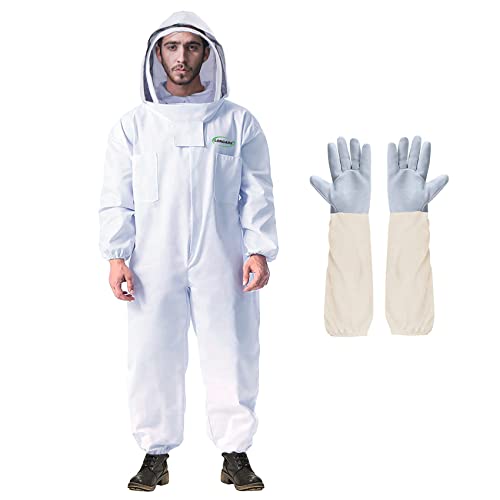
The most-reviewed bee suit on Amazon and a sensible first suit. It is a full-body suit in a ventilated fabric, with a detachable fencing veil and full-length goatskin gloves included, so you are fully kitted out in one purchase. It is light and easy to move in.
- Good: complete with gloves and veil; ventilated; low cost; huge number of owner reviews.
- Watch for: fabric is thinner than three-layer suits; size up to keep it loose.
5. Mann Lake Provent Beekeeping Suit (best Mann Lake suit)
Mann Lake, one of the largest US beekeeping suppliers, describes the Provent as its lightest vented suit. It uses a durable vented synthetic fabric with reinforced knees, heavy-duty elastic at the wrists and ankles, covered heavy-duty zippers and large Velcro pockets. It is built for beekeepers who inspect often in hot weather. Mann Lake also sells a cotton-blend Deluxe suit if you prefer a traditional fabric.
- Good: from an established beekeeping supplier; very breathable; reinforced wear areas.
- Watch for: check the size chart carefully; gloves not included.
6. LONGADS Kids’ Bee Suit (best for kids)
A child-sized version of LONGADS’ full suit, weighing about 1.5 lb, in ventilated fabric. It has a detachable fencing veil with a roomy interior and wide view, elastic bands at the cuffs, and goatskin gloves made for small hands. It is a good way to let kids join inspections safely.
- Good: real protection sized for children; gloves included; lightweight.
- Watch for: kids grow fast; buy for the current size rather than far too big, or bees can get in at the cuffs.
Dealing with wasps, yellowjackets or hornets rather than honey bees? Their stingers are longer and they sting repeatedly, so see our separate guide to the best bee suits for hornets.
Full suit, jacket or just a veil?
| Option | Protection | Comfort | Who it suits |
|---|---|---|---|
| Full bee suit | Head to ankle | Warmest | Beginners, defensive colonies, anyone who wants peace of mind |
| Bee jacket with veil | Head to waist; wear jeans below | Cooler, quicker on and off | Calm hives, quick inspections, hot days |
| Veil only | Face and neck | Coolest | Experienced beekeepers with gentle bees |
Most beginners start with a full suit and add a jacket later for quick jobs. See the best ventilated bee jackets and best bee veils.
How to choose a bee suit
Fabric: ventilated mesh, cotton or poly-cotton
- Three-layer ventilated mesh has an outer mesh, a thick spacer layer and an inner mesh. The layers hold the fabric surface far enough from your skin that a stinger cannot reach you, while air flows straight through. This is the most sting-resistant and the coolest option.
- Cotton is breathable, quiet, and tough when it is heavy enough, but it gets hot in direct sun and bees can sting through where it pulls tight.
- Poly-cotton blends dry faster, resist stains and hold their shape better than pure cotton. A medium weight (around 250–300 gsm) is a good balance.
Veil: fencing or round
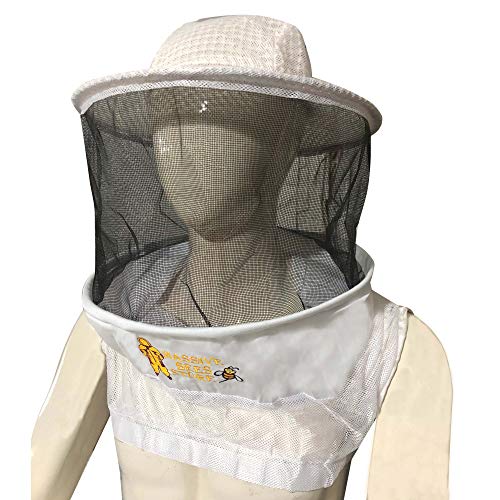
A fencing veil is a mesh hood held away from your face by a flexible frame. It is easy to pack and gives a wide view. A round veil uses a brimmed hat and hoop to keep the mesh well off your neck and face, and it shades your eyes. Round veils are cooler in sun; fencing veils are easier with glasses and in wind. The best suits let you swap between them, and always attach the veil with a zipper, not ties.
Sizing
Buy a bee suit loose. Anywhere the fabric stretches tight across your back, shoulders or knees is where bees sting through. Most beekeepers go one size up from their normal clothes so they can wear a layer underneath and bend and lift boxes freely. Check the maker’s chart for both chest and height; tall people often need to size up for leg length.
Details that keep bees out
- Heavy brass zippers (YKK is the benchmark), with the zipper ends covered or closed with Velcro.
- Elastic wrists and ankles, plus thumb loops and foot stirrups so sleeves and legs cannot ride up.
- Double stitching at the crotch and knees, which take the most strain.
- Enough pockets for a hive tool, phone and notebook.
Is any bee suit truly sting-proof?
No suit is 100% sting-proof, but a good one gets very close. Most stings through a suit happen where the fabric presses against skin: across the shoulders, on the thighs when kneeling, or at the wrists where gloves meet sleeves. Three-layer mesh suits are the most resistant because of their thickness. You can cut stings further with a few habits:
- Wear light-colored clothing underneath and keep the suit loose.
- Tuck the suit legs into boots, or seal them with beekeeper boots and boot bands.
- Wear gauntlet beekeeping gloves that overlap your sleeves.
- Use your smoker, work slowly, and inspect on warm, calm days when foragers are out. See how to keep your bees calm.
- Wash your suit regularly. Stings leave alarm pheromone on the fabric that marks you as a target.
Bee suits for kids
Children can safely help with hive inspections in a properly fitted kids’ bee suit with gloves and a veil. Choose one that fits now, or is only slightly large. A suit that is far too big lets bees in at the ankles and wrists, and loose fabric makes kids clumsy around frames. Start them with a calm colony, short visits and a job to do, such as holding the smoker or spotting the queen.
Frequently asked questions
Can bees sting through a bee suit?
Occasionally, through thin fabric that is pulled tight against your skin. Honey bee stingers are short, so a loose-fitting suit, especially a three-layer ventilated one, stops almost all stings. If you are allergic to bee stings, talk to your doctor before keeping bees.
Why are bee suits white?
Bees are more defensive toward dark, furry shapes, which resemble natural hive predators such as bears and skunks. White and light colors also reflect heat and make it easy to spot a bee on your sleeve.
Do I need a full bee suit as a beginner?
It is strongly recommended. A full suit lets you learn to handle frames without worrying about stings, and you can switch to a jacket or veil later once you know your bees. Many beehive starter kits include a suit.
How do you wash a bee suit?
Remove the veil first, then machine-wash the suit in cold or warm water with a mild detergent and hang it to dry. Most veils should be hand-rinsed. Scrape off propolis and wax before washing, and wash after any session with many stings to remove the alarm pheromone.
What should I wear under a bee suit?
Light, loose clothing: a thin long-sleeved shirt and lightweight trousers in summer, and a warmer layer in cool weather. Avoid wool and fleece, which bees tend to target, and skip strong perfumes or scented products.
Is a ventilated bee suit worth it?
If you keep bees anywhere with warm summers, yes. Heat exhaustion is a real risk in a cotton suit on a hot afternoon. A ventilated suit lets you work longer and more calmly, and its thickness gives better sting protection too.
For the rest of your protective gear, see our protective clothing guides and beekeeper suit guide.