Bee Sting Treatment: Fast Relief, What Works and When to Get Help
Honey Garage is reader-supported. As an Amazon Associate we earn from qualifying purchases, at no extra cost to you. Read our affiliate disclosure.
If someone has trouble breathing, swelling of the face, lips or throat, hives spreading over the body, dizziness or fainting after a sting, call 911 (or your local emergency number) immediately. Use their epinephrine auto-injector if they have one. This is anaphylaxis, a medical emergency.
For an ordinary bee sting, with pain, redness and swelling where you were stung, treatment is simple. Get the stinger out fast, wash the area, and apply something cold. Then use an anti-itch cream or a sting relief swab for the pain and itch. Most stings settle within a few hours, and swelling usually eases within a day or two.
How to treat a bee sting: step by step
- Move away calmly from the hive or nest. Other bees may follow the alarm scent a sting leaves behind.
- Remove the stinger within seconds. Honey bees leave their barbed stinger and venom sac in the skin, and it keeps pumping venom. Research has found that speed matters far more than method: scrape it out with a fingernail or card, or just pull it out, but do it right away. Wasps and most other stinging insects do not leave a stinger.
- Wash the area with soap and water.
- Apply a cold pack or ice wrapped in a cloth for 10–20 minutes at a time to reduce pain and swelling. If the sting is on an arm or leg, raise it.
- Soothe the pain and itch with a sting relief swab, hydrocortisone cream or calamine lotion. An over-the-counter oral antihistamine or pain reliever can also help; follow the label, and ask a pharmacist if you are unsure what is suitable, especially for children or during pregnancy.
- Don’t scratch. Scratching increases swelling and itching and can lead to infection.
Normal reaction, large local reaction or allergy?
| Reaction | What it looks like | What to do |
|---|---|---|
| Normal local reaction | Sharp pain, a red welt and mild swelling at the sting site; fades within hours to a day or two | Home treatment as above |
| Large local reaction | Swelling that spreads well beyond the sting, sometimes a whole hand or forearm, peaking after 1–2 days and lasting up to a week or more | Cold, raise the area, antihistamine and hydrocortisone; see a doctor if it is very large, near the eye, or worrying you |
| Allergic reaction (anaphylaxis) | Symptoms away from the sting: hives, swelling of the face or throat, wheezing, trouble breathing or swallowing, dizziness, rapid pulse, nausea; usually within minutes | Emergency: call 911 and use epinephrine if available |
| Many stings at once | Dozens of stings, even without an allergy | Seek medical care; large amounts of venom can cause serious illness |
| Infection (rare) | Increasing redness, warmth, pain or pus two or more days later, or fever | See a doctor |
Also seek urgent medical care for any sting inside the mouth or throat, where swelling can block the airway. If you have ever had a serious reaction to a sting, ask your doctor about carrying an epinephrine auto-injector and about allergy testing and venom immunotherapy.
The best bee sting relief products
These are useful to keep in a first aid kit, a beekeeping bag or the glovebox. They relieve symptoms of ordinary stings. None of them treats an allergic reaction.
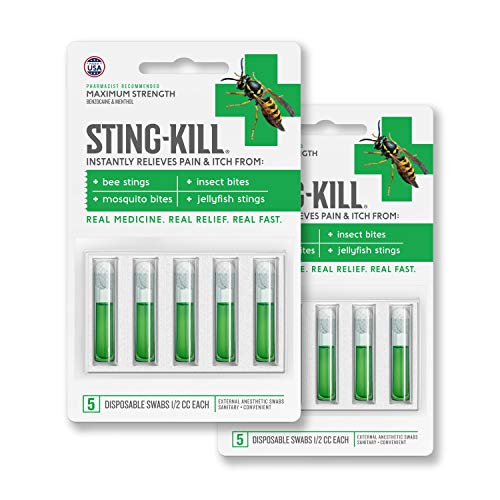
1. Sting-Kill Anesthetic Swabs (best for fast pain relief)
Single-use swabs containing benzocaine 20% and menthol 1%. Benzocaine is a topical anesthetic that numbs the pain, and menthol cools. The sealed swabs are small enough to keep in a pocket, beekeeping bag or first aid kit.
- Good: numbs pain within minutes; clean, portable single-use swabs.
- Watch for: read the label for age limits and warnings; do not use on broken skin or if you are sensitive to benzocaine.
2. Cortizone-10 Maximum Strength Itch Relief Cream with Aloe (best for itch and swelling)
Hydrocortisone 1%, the strongest over-the-counter strength, calms the itch and inflammation of stings and bites over the following hours and days. This version adds aloe.
- Good: reliable, widely recommended treatment for itch; good for larger local reactions.
- Watch for: follow the label; not for use on large areas or for long periods without advice.
3. General Medi Instant Cold Packs, 8 Pack (best cold pack for the field)
Squeeze-activated instant cold packs that need no freezer, so you can cool a sting immediately at the apiary, on a hike or at a picnic. Cold is the single most effective first step for sting pain and swelling.
- Good: works anywhere without ice; cheap enough to keep several.
- Watch for: single use; wrap in a cloth rather than applying directly to skin.
4. Cutter BiteMD Insect Bite Relief Stick (best pocket stick)
An analgesic and antiseptic stick that begins working right away on stings and bites from wasps, mosquitoes, chiggers and more. The first aid antiseptic helps reduce the chance of infection. Its small size makes it easy to carry.
- Good: compact; relieves pain and itch; antiseptic.
- Watch for: check the label for ingredients and directions.
5. Bug Bite Thing Suction Tool (chemical-free option)
A reusable suction tool with no creams or chemicals, used on bites and stings. It is enormously popular with owners, and some people use it to help lift out a stinger. There is little scientific evidence that suction removes venom once it is injected, so treat it as an extra, not a substitute for cold and anti-itch cream.
- Good: reusable and chemical-free; many owners say it helps with itching.
- Watch for: limited scientific evidence; will not help an allergic reaction.
Home remedies for bee stings: do they work?
Baking soda paste, vinegar, honey, toothpaste and meat tenderizer are all popular remedies. There is little scientific evidence that any of them does more than a cold compress. Bee venom is injected under the skin, where a paste on the surface cannot neutralize it. They are generally harmless on unbroken skin, so if one makes you feel better, there is no harm in it. But cold, hydrocortisone and an antihistamine are the options with the best support for pain, itch and swelling.
| Remedy | Verdict |
|---|---|
| Ice or a cold pack | Works: reduces pain and swelling |
| Hydrocortisone 1% cream or calamine lotion | Works: eases itch and inflammation |
| Oral antihistamine | Helps itch and larger swelling; follow the label |
| Baking soda paste, vinegar, toothpaste | Little evidence; harmless on intact skin |
| Honey | Little evidence for stings; mildly soothing |
| Meat tenderizer | Studies found no benefit |
How to avoid getting stung
- Stay calm and move away slowly from bees; swatting makes them more defensive.
- Wear light-colored clothing, and avoid strong perfumes and scented products outdoors.
- Cover food and drinks outside, especially sweet drinks in cans, which attract yellowjackets.
- Wear shoes in grass and clover.
- Beekeepers: wear a properly fitted bee suit, veil and gloves, use a smoker, and work calmly on warm, still days. See how to keep your bees calm.
Frequently asked questions
What is the fastest way to relieve a bee sting?
Remove the stinger immediately, then hold something cold on the sting. A sting relief swab with a topical anesthetic, such as benzocaine, numbs the pain within minutes for many people.
How long does bee sting swelling last?
Mild swelling usually goes down within a day or two. A large local reaction can keep growing for one to two days and take up to a week or more to fade completely. Cold, raising the area and an antihistamine help.
Should you scrape or pull out a bee stinger?
Either. The old advice to scrape rather than pinch has not held up in research. What matters is getting it out within seconds, because the venom sac keeps pumping for up to a minute or so.
Are wasp stings treated the same way?
Yes, apart from stinger removal: wasps and yellowjackets rarely leave a stinger. They can sting repeatedly, though, so move away from the nest first. See our guide to ground-nesting yellowjackets.
What if my dog gets stung?
Remove any stinger, apply a cold compress and watch closely. Call your vet right away for swelling of the face or throat, trouble breathing, vomiting, weakness or many stings. See what to do when a bee stings your dog.
For more on stings from a beekeeper’s point of view, read a beekeeper’s guide to bee stings. This page is general information, not medical advice. If you are unsure, contact a doctor, pharmacist or poison control center.