
Best Mason Bee House: Top Picks, Setup and Year-Round Care
This page may contain affiliate links. As an Amazon Associate, we earn from qualifying purchases, at no additional cost to you.
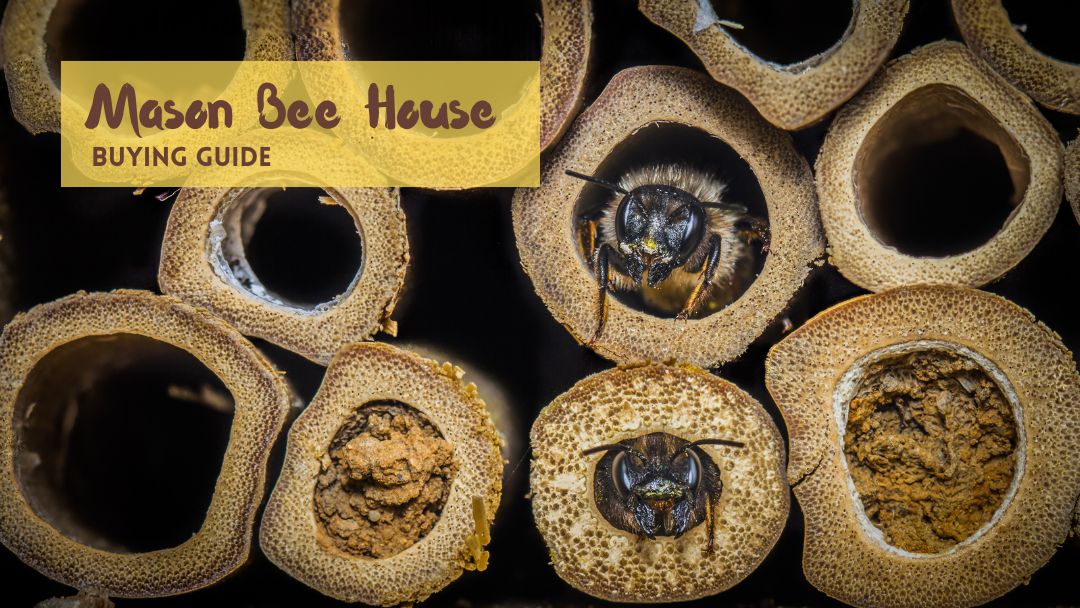
A mason bee house is a set of nesting tubes, in a box with a roof, where gentle, solitary mason bees lay their eggs each spring. Mason bees are outstanding early-season pollinators of fruit trees, berries and spring flowers. They rarely sting, and they need no hive, suit or smoker. The best mason bee house has tubes about 5/16 in (8 mm) wide and at least 6 in deep, a roof that keeps rain off, and tubes or trays you can open or replace, so you can clean out pests each year.
Below are our favorite mason bee houses, followed by what to look for, where and when to put one up, and how to look after your bees through the year.
Our picks at a glance
| Mason bee house | Best for |
|---|---|
| WHITEHORSE Premium Cedar Bee House | Best overall, with replaceable tubes |
| Nature’s Way PWH1-C Bee House | Most popular compact house |
| Wax-Coated Handmade Mason Bee House | Best budget pick |
| Woodlink 28551 Heavy Duty Cedar House | Sturdiest cedar build |
| Welliver Outdoors Standard House | Simple, classic design |
| AukBeeFun 6 in nesting tubes | Refills for any house |
The 5 Best Mason Bee Houses
There are many types of mason bee houses in the market. No single product is ideal for everyone. We all have different needs, requirements, and priorities. Some mason bee houses are designed only for the bees, whereas some focus on several insects. So, pick the one that’s right for you.
1. WHITEHORSE Premium Cedar Bee House
Our top pick is built the way mason bee experts recommend. The 6-inch nesting tubes are replaceable, so you can pull them out after the season, harvest the cocoons and put in fresh tubes. That one feature matters more than any other: old, dirty tubes build up mites and fungus year after year.
The house is made from western cedar with a thick roof and a large overhang that keeps the tubes shaded and dry, plus a half-inch gap in front of the tubes for extra rain protection. It is screwed together rather than nailed, and it mounts on a wall or post with the included French cleat and screws. It averages 4.6 stars from about 150 Amazon ratings.
| Pros | Cons |
|---|---|
| ✅ Replaceable 6″ tubes for easy cleaning | ⭕ Wall or post mount only (no hanging) |
| ✅ Weather-resistant cedar | ⭕ Fewer reviews than mass-market houses |
| ✅ Deep roof overhang keeps tubes dry | |
| ✅ Mounting cleat and screws included |
The best all-round choice if you want to keep mason bees year after year.
2. Nature’s Way PWH1-C Bee House
This is the most-reviewed bee house in the category, with over 2,000 Amazon ratings averaging 4.3 stars. It is a compact 8″ H x 6″ W x 3.5″ D house with an easy-mount hanger, and it attracts mason bees, leafcutter bees and other solitary bees.
The listing does not say whether the nesting tubes can be removed. Check the current product photos before buying. If the tubes are fixed, add paper liners so you can take the cocoons out at the end of the season.
| Pros | Cons |
|---|---|
| ✅ Thousands of positive reviews | ⭕ Small capacity |
| ✅ Compact and easy to hang | ⭕ Nesting material details not listed |
| ✅ Works for mason and leafcutter bees |
A proven, compact option for a small garden or balcony.
3. Wax-Coated Handmade Mason Bee House
For a budget pick, this wax-coated wooden bee hotel gets the most important detail right: its kraft paper tubes are 5/16 inch wide and 6 inches long, the size mason bees prefer. Tubes that are too shallow lead to more male bees and fewer females in the next generation.
The wax coating helps the wood last outdoors, and a metal hook on the back makes it easy to hang on a wall or garden stake. It averages 4.5 stars from almost 400 ratings.
| Pros | Cons |
|---|---|
| ✅ Correct 5/16″ x 6″ tube size | ⭕ Paper tubes soften if they get wet; needs a sheltered spot |
| ✅ Paper tubes can be replaced | ⭕ Generic brand |
| ✅ Wax-coated wood | |
| ✅ Metal wall hook included |
The best value if you want the right tube size without spending much.
4. Woodlink 28551 Heavy Duty Cedar Mason Bee House
If you want room for a larger population, the Woodlink 28551 is a 14-inch tall cedar house with hinged lids and screwed-together construction. The hinged access makes it easier to check and clean the nesting area at the end of the season.
It has fewer reviews than the other picks (4.3 stars from around 60 ratings), and the listing gives little detail about the nesting material, so plan on adding your own 5/16″ paper tubes.
| Pros | Cons |
|---|---|
| ✅ Large capacity | ⭕ Bulky |
| ✅ Hinged lids for access | ⭕ Limited listing detail |
| ✅ Solid cedar, screwed construction | ⭕ Fewer reviews |
A sturdy option for gardeners who want a bigger mason bee population.
5. Welliver Outdoors Standard Mason Bee House
The square-shaped bee house by Welliver is another fantastic option. It is 7.25″ long, 5.5″ wide, and 5″ high. It is also, made in the USA. The tubes are made of cardboard and they are replaceable.
The already assembled 100 straws mason bee house is a popular choice. It is very easy to unroll the straws and harvest the cocoons. However, it is recommended to have some kind of rain or weather protection as the paper tubes will be easily wasted if wet.
Let’s take a look at the pros and cons of this one:
| Pros | Cons |
|---|---|
| ✅ Sturdy and attractive | ⭕ Loose joints |
| ✅ Bees quickly get attracted | ⭕ No mounting or hanging hardware |
| ✅ Replaceable tubes | |
| ✅ Perfect depth for bees |
If you are looking for a not-fancy, but effective bee house, then you should go for it.
Replacement nesting tubes
Whichever house you choose, keep a pack of spare tubes on hand so you can swap in clean ones each spring. Look for tubes with a 5/16″ inside diameter and 6″ length. The AukBeeFun cardboard tubes match those dimensions, come in packs of 120 or 200, and average 4.6 stars.
What to look for in a mason bee house
- Hole diameter of about 5/16 in (8 mm). This suits the blue orchard mason bee, the common spring mason bee in North America. Houses with a mix of sizes also attract other species; leafcutter bees prefer about 1/4 in (6 mm). See what size holes a mason bee house needs.
- Depth of 6 in or more. Females lay female eggs at the back of the tube and male eggs toward the front. Shallow tubes produce mostly males and fewer bees next year.
- Tubes or trays you can open or replace. Paper tubes, reed tubes with liners, or wooden trays that separate let you harvest cocoons and remove pests. Sealed bamboo and drilled blocks you cannot open look nice but build up mites and disease within a few years.
- A roof with an overhang of at least an inch or two, to keep rain off the tube ends.
- Untreated wood, ideally cedar or pine, with no pesticide or preservative inside.
- Solid mounting. The house should fix firmly to a wall, fence or post. Bees avoid houses that swing in the wind.
Handy? You can build a good one yourself; see how to make a homemade mason bee house.
Mason bee houses with bees: buying cocoons
Wild mason bees often find a new house on their own within a season or two, especially near fruit trees and gardens. To get started faster, buy mason bee cocoons from a specialist bee supplier in late winter. They ship dormant, and you place them next to the house in spring to hatch. Buy from a supplier in your region, because local bees are adapted to your climate and bloom times. Avoid houses that come “stocked” with old, uncleaned tubes, which can carry pests.
Where to put a mason bee house
- Facing east or southeast, so morning sun warms the bees and gets them flying early.
- About 3–7 ft off the ground, on a wall, fence or post, under an eave if possible.
- Sheltered from driving rain and strong wind, and from afternoon sun in hot climates.
- Near flowers. Mason bees forage over a short range, within a few hundred feet of home.
- Near mud. They seal each cell with mud, so they need moist, clay-rich soil nearby. Keep a patch of bare soil damp if yours is sandy or dry.
More detail in our guides to setting up a mason bee house and whether you can move one.
When to put out a mason bee house
Put the house up in early spring, before daytime temperatures reach about 50–55 °F (10–13 °C), when mason bees start to emerge. That is usually as the first fruit trees bud. If you bought cocoons, set them out when daytime temperatures stay above about 55 °F (13 °C) and flowers are opening. See when to put a mason bee house out.
Mason bee care through the year
| Season | What happens | What you do |
|---|---|---|
| Early spring | Males emerge first, then females; mating | Hang the house and set out cocoons; keep mud available |
| Spring (about 4–6 weeks) | Females fill tubes with pollen, eggs and mud walls | Leave them alone; add more tubes if they fill up |
| Early summer | Adults die off; larvae feed on stored pollen | Bring filled tubes into a shed or garage, in a fine-mesh bag, to protect them from parasitic wasps |
| Fall | Larvae have spun cocoons and become adults inside | Open tubes, harvest and clean cocoons, discard old tubes |
| Winter | Dormant | Store cocoons cold (a refrigerator at about 35–40 °F with some humidity) until spring |
Step-by-step guides: harvesting mason bee cocoons, cleaning a mason bee house and the mason bee life cycle.
Common mason bee house problems
- Pollen mites build up in reused tubes and starve larvae. The fix is fresh tubes each year and cleaning cocoons in fall.
- Parasitic wasps (tiny wasps that drill into tubes through the walls) attack in summer. Move filled tubes into a mesh bag once nesting ends.
- Chalkbrood, a fungal disease, shows as chalky, hard larvae. Discard infected tubes. See chalkbrood in mason bees.
- Birds and larger wasps pull larvae from tube ends. A wire mesh guard a couple of inches in front of the tubes stops birds. See protecting mason bees from wasps and the full pest overview.
- No bees at all. Check for a mud source, flowers within a short flight, morning sun, and a firmly mounted house. Patience helps: wild bees can take a season to find it.
Frequently asked questions
Do mason bees sting?
Very rarely. Males have no stinger, and females are gentle and sting only if trapped or squeezed, and then much more mildly than a honey bee. That makes a mason bee house safe near patios and play areas.
Do mason bees make honey?
No. Mason bees are solitary and store only a pollen and nectar loaf for each egg. You keep them for pollination, not honey. For honey, you need honey bees in a hive; see our beehive starter kit guide.
Will a mason bee house attract wasps?
Some solitary wasps nest in tubes too, but they are generally harmless to people. Stinging social wasps such as yellowjackets do not use bee houses. Parasitic wasps that attack mason bee larvae are the main concern; protect filled tubes in a mesh bag over summer.
Should I bring my mason bee house in for winter?
Bring the filled tubes in after nesting ends in early summer, harvest the cocoons in fall, and store the cocoons cold over winter. The empty house can stay outside, but cleaning it and storing it dry makes it last longer.
How long do mason bees live?
Adults fly for only about four to six weeks in spring. The rest of the year the next generation develops inside the tubes as eggs, larvae, then adults in cocoons, ready to emerge the following spring.
Want to go further? Read our guide to keeping mason bees, how to attract mason bees, raising leafcutter bees for summer pollination, and the best beekeeping books, including Mason Bee Revolution.