Best Bee Smokers for Beekeeping (and How to Keep One Lit)
Honey Garage is reader-supported. As an Amazon Associate we earn from qualifying purchases, at no extra cost to you. Read our affiliate disclosure.
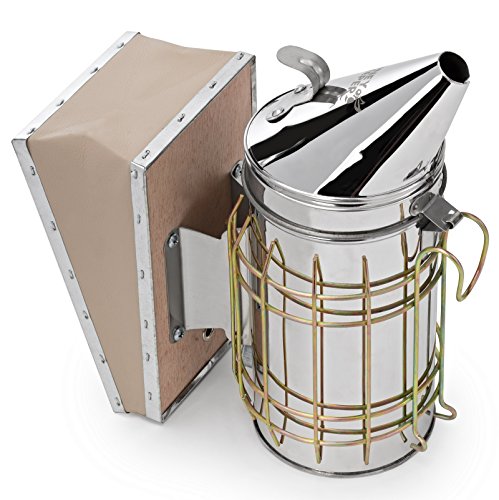
A bee smoker is a small metal firebox with a bellows. A few puffs of cool smoke at the entrance and under the lid mask the bees’ alarm pheromone and make them far calmer while you inspect. The best bee smoker for most beekeepers is a stainless steel smoker about 11–12 in tall with a 4 in chamber and a heat shield. That is big enough to stay lit through a full inspection and safe to set down or grab mid-job.
Our picks at a glance
| Smoker | Size | Best for |
|---|---|---|
| VIVO Stainless Steel Smoker with Heat Shield | 11 in tall, 4 in chamber | Best overall value, most reviewed |
| Foxhound Bee Co 12.5 in Pro Smoker | 12.5 in tall, 4 in chamber | Best large smoker for long inspections |
| Goodland Bee Supply 11 in Smoker | 11 in tall | Comes with smoke logs to get started |
| ThxBees Smoker Kit | 11 in tall, 4 in wide | Best budget kit |
The best bee smokers
1. VIVO Stainless Steel Bee Smoker with Heat Shield (best overall value)
The most-reviewed bee smoker on Amazon, and the standard size most beekeepers use: 11 in from base to nozzle tip with a 4 in canister. It is stainless steel with a full heat shield, a mounting hook to hang it on a hive box, and a perforated grate to keep air flowing under the fuel.
- Good: right size for one or two hives; heat shield and hook; proven by thousands of owners.
- Watch for: the bellows is basic; for big apiaries a taller smoker stays lit longer.
2. Foxhound Bee Co 12.5 in Pro Bee Smoker (best large smoker)
A bigger stainless smoker from a US beekeeping supplier: 12.5 in tall with a 4 in chamber, so it holds more fuel and keeps smoking through long inspections or several hives. It has a full heat guard, a heavy-duty airflow plate that resists burnout, and a built-in airflow tube for easier lighting and steady smoke.
- Good: larger fuel capacity; sturdy airflow plate; easy to light.
- Watch for: limited stock at the time of writing; heavier than an 11 in smoker.
3. Goodland Bee Supply 11 in Stainless Smoker with Smoke Logs (best starter bundle)
A polished, welded stainless steel smoker with a welded heat cage that protects your hands and the smoker if it is dropped. It has a perforated fuel stand for airflow and a hive mounting hook, and it comes with three mugwort smoke logs, so you can light it the day it arrives.
- Good: solid welded build; fuel included; designed to handle with gloves on.
- Watch for: standard size; you will need to buy more fuel soon.
4. ThxBees Stainless Steel Smoker Kit (best budget kit)
An 11 × 4 in stainless smoker with a 7.28 in bellows and an outer heat shield. A tripod gasket at the bottom keeps flames off the base of the barrel for better airflow and a longer life. A good low-cost choice for a first smoker.
- Good: low cost; full heat shield; tripod base improves airflow.
- Watch for: lighter-gauge build than the pricier smokers.
What to look for in a bee smoker
- Size. A 4 × 7 in chamber (roughly 11 in tall with the nozzle) holds enough fuel for one or two hives. A larger 4 × 10 in smoker, about 12–13 in tall, stays lit longer for bigger apiaries. Small “mini” smokers go out too quickly.
- Stainless steel resists rust far better than tinned or galvanized steel. Copper smokers look beautiful and work well, but cost more and tarnish.
- A heat shield, a cage around the firebox, protects your hands, gloves and suit from burns.
- A solid bellows with a strong spring and leather or tough synthetic sides, which pushes air steadily without tiring your hand.
- A grate or airflow plate at the bottom of the chamber, so air can get under the fuel and keep it smoldering.
- A hook to hang the smoker on the side of a hive box while you work.
What about electric bee smokers?
“Electric” smokers vary. Some replace the bellows with a small battery fan but still burn fuel; others are fireless devices that produce a vapor. They can be handy if you have trouble working a bellows, but reviews are mixed and most beekeepers still prefer a traditional smoker, which is simple, cheap and reliable. Read the listing carefully to see what you are buying.
How to light a bee smoker so it stays lit
- Start small. Light a loose handful of tinder, such as a crumpled piece of plain paper, dry grass or pine needles, and drop it into the chamber.
- Puff while it catches. Work the bellows gently until you have a small, steady flame.
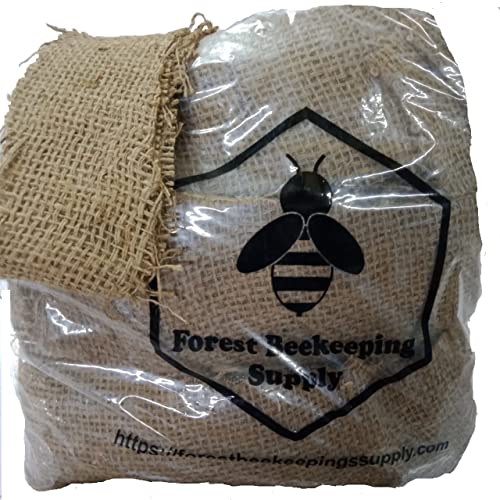
- Add fuel in layers. Add a little more fuel, puff, then more, until the chamber is packed about three-quarters full. Burlap, cotton fiber, pellets or pine needles all work; see the best bee smoker fuel.
- Top up and close. Top with a final layer of green grass or leaves to cool the smoke, close the lid and puff until thick, white smoke comes out.
- Check the smoke. Cool, white smoke is what you want. Thin blue or gray smoke, or sparks, mean it is burning too hot. Add fuel and puff less.
- Keep it going. Give it a few puffs every few minutes during the inspection so it does not go out.
How to use a bee smoker on the hive
- Entrance first. Give two or three gentle puffs into the entrance and wait about a minute.
- Then under the lid. Lift the cover slightly and puff a little smoke under it, then open the hive.
- Little and often. A puff across the top bars when bees boil up is enough. Too much smoke drives bees down, hides the queen and can upset the colony.
- Keep it cool and away from the bees. Hold the nozzle a few inches back; hot smoke or sparks hurt bees.
- Be fire-safe. Set the smoker on bare ground or a hive lid, never on dry grass. Put it out after use by plugging the nozzle with grass or a cork, or empty it into a metal can. Many wildfires have started from carelessly dumped smoker fuel.
Why smoke works, and when you can skip it: the bee smoker and why it is necessary. Handy? See how to make a homemade bee smoker.
Frequently asked questions
Does smoke hurt the bees?
Cool smoke, used lightly, does not harm bees. It masks the alarm pheromone guard bees release and prompts many bees to fill up on honey, which makes them calmer. Hot smoke, sparks or heavy smoking can injure bees and disrupt the colony.
Why does my bee smoker keep going out?
Usually there was not enough burning material at the bottom before you added fuel, the fuel is damp, or it is packed too tightly to let air through. Build it up in layers, and puff the bellows every few minutes during the inspection.
How do you clean a bee smoker?
Empty the ash after each use, once it is cold. Every so often, scrape the creosote buildup from inside the lid and nozzle with your hive tool, so the lid closes properly and smoke flows freely.
Do I always need to use a smoker?
Many beekeepers skip it for a quick peek at a calm colony on a warm, sunny day. Always have it lit and ready for full inspections, honey harvests and defensive colonies.
Complete your kit with a hive tool and a bee suit, or see our guide to beekeeping tools.