
Best Bee Smoker Fuel: Burlap, Cotton, Pellets and Free Options
Honey Garage is reader-supported. As an Amazon Associate we earn from qualifying purchases, at no extra cost to you. Read our affiliate disclosure.
The best bee smoker fuel burns slowly and makes plenty of cool, white smoke with no harmful fumes. Natural jute burlap and cotton fiber are the most popular bought fuels. Smoke pellets are the most convenient. Dry pine needles are the best free option. Whatever you use, it must be natural and untreated: no synthetic fabric, painted or treated wood, or lighter fluid.
Bee smoker fuels compared
| Fuel | Lighting | Burn time | Smoke | Cost |
|---|---|---|---|---|
| Jute burlap (rolls or pellets) | Easy | Long | Cool, white, plenty | Low |
| Cotton fiber | Very easy | Medium to long | Light, cool | Low to medium |
| Smoke pellets | Easy | Long, consistent | Mild | Medium |
| Pine needles | Easy when dry | Medium | Thick, cool, pleasant smell | Free |
| Untreated wood shavings or dry leaves | Easy | Short to medium | Good | Free |
| Plain corrugated cardboard | Easy | Medium | Good; tends to run hot | Free |
The best bee smoker fuels to buy
1. AukBeeFun Jute Burlap Rolls, 2 lb (best burlap fuel)
Natural jute burlap in rolls sized to drop into a standard smoker. Burlap is easy to light and smolders slowly into plenty of cool, white smoke. Two pounds lasts a hobbyist a long time.
- Good: natural, untreated jute; long burn; lots of cool smoke.
- Watch for: rolls can be packed too tight; loosen them slightly for airflow.
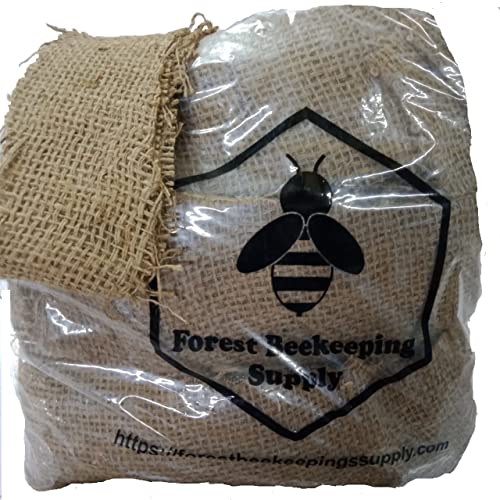
2. Forest Beekeeping Supply Cotton Fiber Smoker Fuel, 1 lb (easiest to light)
All-natural cotton fiber that catches almost instantly and produces a light, cool smoke. It is ideal as a starter layer under burlap or pine needles, or on its own for quick inspections.
- Good: lights in seconds; clean, light smoke; good starter fuel.
- Watch for: burns faster than burlap; pack it firmly for longer sessions.
3. Hahafelt Burlap Smoker Fuel Pellets, 4.2 lb (best value bulk)
Natural burlap cut into small pieces, which light more easily than rolled burlap and pack evenly into any smoker. The larger bag suits beekeepers with several hives.
- Good: easy to light and pack; natural burlap; good bulk value.
- Watch for: loose pieces are messier to carry than rolls.
4. Mugwort Bee Smoker Pellets, 108 Pack (most convenient)
Handmade mugwort pellets that produce a clean, mild smoke. Each pellet burns steadily for about 15–20 minutes according to the maker. Drop one or two onto a small starter flame and you have consistent smoke with almost no fuss.
- Good: very convenient; steady, predictable burn; minimal residue.
- Watch for: costs more per use than burlap or free fuels.
Free bee smoker fuel
- Pine needles. The classic free fuel. Collect them dry, store them in a paper bag, and pack them loosely.
- Dry leaves, grass and untreated wood shavings. Good starters and fillers. Add a handful of green grass on top to cool the smoke.
- Plain cardboard and egg cartons. Only plain, unprinted, unwaxed cardboard. Roll strips into a tube that fits the chamber.
- Untreated burlap sacks from coffee roasters. Avoid feed or produce sacks that may be treated with oils or pesticides.
- Sumac seed heads, rotted wood and dried herbs such as lavender or rosemary. Traditional options many beekeepers like for their smell.
To make your own blend, see how to make natural bee smoker fuel.
What never to burn in a bee smoker
- Synthetic fabrics, plastics or foam, which give off toxic fumes.
- Painted, stained, pressure-treated wood, plywood or MDF.
- Glossy, printed or waxed paper and cardboard.
- Burlap or sacking treated with oil, fire retardant or pesticide.
- Lighter fluid, gasoline or fire starters with chemicals.
- Anything that smells harsh or chemical when it burns. If it bothers you, it bothers the bees.
How to pack a smoker for long-lasting smoke
Light a small wad of tinder in the bottom, puff until it flames, then add fuel a little at a time, puffing between layers, until the chamber is about three-quarters full. Top it with a handful of green grass or leaves to cool the smoke, close the lid and puff until the smoke runs thick and white. Our bee smoker guide has the full lighting method and the smokers we recommend.
Frequently asked questions
What is the best fuel for a bee smoker?
Untreated jute burlap is the favorite of many beekeepers: cheap, easy to light, long burning and full of cool smoke. Pine needles are the best free option, and smoke pellets are the most convenient.
Can I use wood pellets in a bee smoker?
Plain hardwood cooking pellets can work mixed with an easy-to-light fuel, but they need a good bed of burning material to catch and can run hot. Pellets made for bee smokers are designed to light easily and smolder slowly.
Can I use cardboard in a bee smoker?
Yes, plain, unprinted corrugated cardboard works well, rolled to fit the chamber. Avoid glossy, printed or waxed cardboard, and top it with green grass, as cardboard can burn hot.
How much fuel does one inspection use?
A full load in a standard 4 × 7 in smoker usually lasts through one or two hive inspections. Carry extra fuel in a pocket or bag for longer sessions.
Does the fuel affect the honey?
Not if you smoke lightly. Heavy smoking over open honey supers can leave a smoky taste, so use only a puff or two when you pull supers for harvest, or use a fume board or bee escape instead. See our honey harvesting guides.
New to smokers? Read why beekeepers use a smoker and our hive inspection guide, or browse all our beekeeping tool guides.
