Bee Venom Cream: What the Evidence Says (and 2 Worth Trying)
Honey Garage is reader-supported. As an Amazon Associate we earn from qualifying purchases, at no extra cost to you. Read our affiliate disclosure.
Bee venom cream is a skincare product containing a tiny amount of purified honey bee venom, sold mainly as an anti-wrinkle or “plumping” face cream or serum. The evidence that it works is thin: a handful of small studies, mostly without placebo groups, found modest improvements in wrinkles or acne. It can also cause a serious allergic reaction. If you are allergic to bee stings, do not use it. If you are not, patch-test first and treat it as a pleasant cosmetic, not a treatment.
Our picks at a glance
| Product | Best for | Key feature |
|---|---|---|
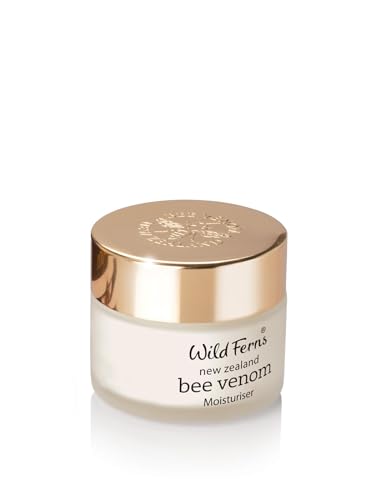
| Wild Ferns Bee Venom Serum with Manuka Honey | New Zealand-made classic | Bee venom from Venom New Zealand, plus manuka honey and royal jelly |
| KUSHI Bee Venom Serum | Sensitive-skin shoppers who want a stated venom level | States 0.5% bee venom; fragrance-, paraben-, phthalate- and sulfate-free |
We list only two because most bee venom creams on Amazon make claims no study supports, such as “natural Botox” or pain and joint relief. These two are straightforward cosmetics that carry a clear allergy warning.
The best bee venom serums and creams
1. Wild Ferns Bee Venom Serum with Manuka Honey (best New Zealand-made)
Wild Ferns is a New Zealand skincare brand, and this serum is made in New Zealand. It combines bee venom with manuka honey and royal jelly, two other hive ingredients popular in skincare. The venom comes from VENZ (Venom New Zealand), a named supplier, and the maker says it is collected without harming the bees. Few brands say where their venom comes from.
We like that the label is upfront about safety: it warns not to use the product if you are allergic to bee stings and tells you to patch-test first. As with every bee venom product, evidence for anti-aging benefits is limited, so think of it as a nice serum rather than a wrinkle treatment.
- Good: Made in New Zealand, named venom source, manuka honey and royal jelly, clear allergy warning
- Watch for: Not for anyone allergic to bee stings; royal jelly can also trigger allergies; benefits unproven
2. KUSHI Bee Venom Serum (best for a stated venom level)
KUSHI’s serum is one of the few bee venom products that states how much venom it contains: 0.5% bee venom. It also contains manuka honey, royal jelly, propolis and jojoba oil. It is free of fragrance, parabens, phthalates and sulfates, which suits people who avoid those ingredients or find fragranced skincare irritating.
The directions say to use it once daily and avoid the eyes, and the label states that it contains bee venom and should not be used if you are allergic to bees. It comes in a small 0.5 fl oz bottle. Patch-test first, and remember that propolis is a common skin allergen too.
- Good: States 0.5% venom, fragrance-free, once-daily use, clear allergy warning
- Watch for: Small 0.5 fl oz bottle; contains propolis and royal jelly, which some people react to; benefits unproven
What is bee venom in skincare?
Honey bee venom is a mix of proteins and peptides. The main one, melittin, makes up roughly half its dry weight and is what makes a sting hurt. Another, the enzyme phospholipase A2, is one of the main triggers of sting allergy.
For cosmetics, venom is collected on a glass sheet at the hive entrance carrying a mild electric current. Bees that touch it sting the glass, which does not tear the stinger out, so they survive. The dried venom is scraped off, purified and added to creams in very small amounts. The theory is that it causes a mild local reaction that increases blood flow and briefly plumps the skin, which is why it is marketed against fine lines. For the wider story, see bee venom: medicinal uses and side effects.
Does bee venom cream work? What the research shows
Honestly, we do not know much. Here is what exists:
| Claim | Evidence | How strong? |
|---|---|---|
| Reduces wrinkles | One small Korean study had 22 women use a bee venom serum twice a day for 12 weeks. Wrinkle area and depth were lower than at the start. | Weak: tiny group, no placebo or comparison group |
| Helps acne | A few small trials and lab studies suggest bee venom may calm inflammation and kill acne bacteria. | Weak: few people, short trials |
| Anti-aging in general | Mostly lab-dish and mouse studies. | Very weak for people |
| Joint, muscle or nerve pain (topical creams) | No good evidence that an over-the-counter cream helps. | Not supported |
| “Natural Botox” | Marketing phrase. Bee venom does not relax muscles the way Botox does. | Not supported |
Keep in mind that most bee venom products also contain moisturizing ingredients such as manuka honey, royal jelly, oils and hyaluronic acid. A well-moisturized face looks smoother whatever the headline ingredient, so it is hard to know how much the venom adds. If your goal is fewer wrinkles, daily sunscreen and a retinoid have far better evidence. A dermatologist can advise you.
Bee venom face cream: who should (and should not) try it
Most bee venom products are face creams, serums or masks. They are aimed at fine lines, dullness and “plumping”. If you are curious, not allergic and happy to treat it as a cosmetic, a bee venom face cream is a reasonable thing to try. Expect a slight tingle or warmth; some people like it, others find it irritating.
- Good candidates: adults with no history of sting allergy who want to try a new moisturizer or serum and accept that results may be subtle.
- Do not use it if you have ever had a strong reaction to a bee or wasp sting, carry an epinephrine auto-injector, or are having or have had venom immunotherapy (allergy shots), unless your allergist says otherwise.
- Ask a doctor first if you are pregnant or breastfeeding, have eczema, rosacea or very reactive skin, or have other allergies, especially to bee products like propolis or royal jelly.
- Avoid the eye area and broken or irritated skin.
The allergy risk is real
Bee venom is one of the best-known causes of anaphylaxis, a rapid, whole-body allergic reaction that can be fatal. The amount in a cream is small, but in someone who is allergic, a reaction is possible even from skin contact. Using venom products can also, in principle, sensitize people over time, so a person who tolerated it before may react later. Milder reactions include redness, itching, swelling and rash.
How to patch-test: apply a small amount to the inside of your forearm or behind your ear and leave it for 24–48 hours. If you see redness, itching, swelling or a rash, do not use it. Stop using any product that causes a reaction.
Get emergency help (call 911) if you have trouble breathing, swelling of the lips, tongue or throat, hives spreading beyond where you applied it, dizziness or faintness after using a bee venom product. Signs of a serious reaction to a sting are the same; see a beekeeper’s guide to bee stings.
Bee venom cream for joint pain, and apitherapy stings
Some bee venom creams are sold for arthritis, joint or muscle pain. There is no good evidence that these over-the-counter creams help, and we do not recommend buying one for that purpose. If you have joint pain, see a doctor. There are treatments with real evidence behind them, and joint pain can have causes that need proper diagnosis.
“Bee venom therapy”, part of apitherapy, goes further: live bee stings or venom injections given on purpose. Research on it is limited and mixed. The risk of severe allergic reactions is well documented, and deaths have been reported. Do not try it on your own. Read more in our introduction to apitherapy.
How to choose a bee venom cream
If you decide to try one, a few checks separate reasonable products from the rest:
- A clear allergy warning. A responsible maker tells you not to use it if you are allergic to bee stings and to patch-test first. Be wary of any product that skips this.
- Honest claims. Skip products that promise to “replace Botox”, erase wrinkles, cure acne or relieve arthritis. No study supports those claims, and they suggest the rest of the label may be unreliable too.
- A stated venom content, if you can find one. Most brands do not say how much venom is in the jar, so you cannot compare products or know what you are paying for.
- A known source. Brands that name their venom supplier or say how it was collected are at least being open about it.
- The other ingredients. Read the full list. Fragrance and essential oils are common causes of skin irritation, and propolis and royal jelly can cause allergies in some people.
- Serum or cream. Serums are thin and go on under moisturizer; creams are thicker and moisturize on their own. Pick whichever fits your routine.
How to use a bee venom cream or serum
- Patch-test first, as above.
- Start once a day, or follow the label; KUSHI, for example, says once daily.
- Apply a small amount to clean skin, avoiding the eyes and lips.
- Follow with moisturizer if you use a serum, and sunscreen in the morning.
- Give it a few weeks before judging, and stop if your skin becomes irritated.
Interested in other hive products for skin? See the benefits of beeswax, royal jelly benefits and side effects and propolis benefits and side effects. Each of these can also cause allergies in some people.
Frequently asked questions
What does bee venom cream do for your face?
It causes a mild local reaction that may briefly plump the skin, and it moisturizes thanks to its other ingredients. Small studies suggest possible modest benefits for fine lines and acne, but there is no strong evidence. Do not expect results like a medical treatment.
Is bee venom cream safe?
For most people without a bee allergy it is usually well tolerated, though it can irritate sensitive skin. For people allergic to bee stings it can be dangerous, even as a cream. Always patch-test, and ask a doctor if you have any allergy history.
Does bee venom cream work like Botox?
No. Botox blocks the nerve signals that make muscles contract, which smooths expression lines. Bee venom does not do that; any effect is a mild, temporary plumping and moisturizing of the skin surface.
Are bees harmed to make bee venom cream?
With the usual collection method, bees sting a glass plate rather than skin, so they keep their stinger and survive. Makers such as Wild Ferns say their venom is collected without harming bees.
Does bee venom cream help arthritis or joint pain?
There is no good evidence that over-the-counter bee venom creams relieve arthritis or joint pain. See a doctor about joint pain rather than relying on a cream.
Got stung the old-fashioned way? Our bee sting relief guide covers what actually helps.