Water Source for Bees: Why They Need It and How to Set One Up
Honey Garage is reader-supported. As an Amazon Associate we earn from qualifying purchases, at no extra cost to you. Read our affiliate disclosure.
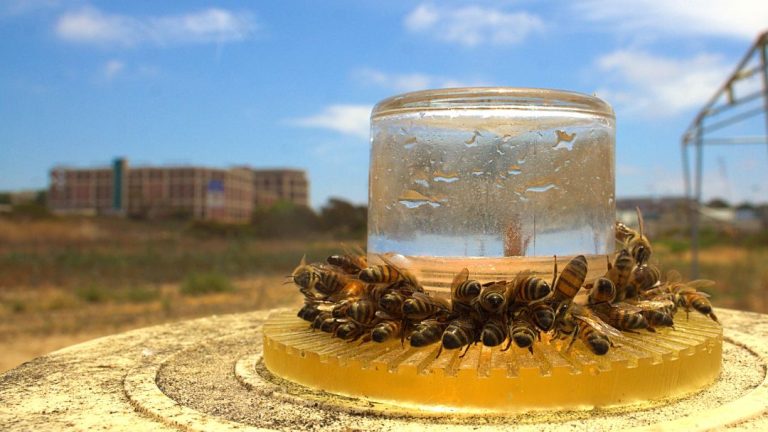
Every honey bee colony needs a reliable water source, and the best one is a shallow container with stones, marbles or floats that bees can stand on while they drink, placed near the hive and never allowed to run dry. Bees use water to cool the hive, to make brood food and to thin stored honey. On a hot day a strong colony can use a quart or more.
If you do not give them a source, they will find their own, and that is often a neighbor’s swimming pool, pet bowl or dripping faucet. Here is why bees need water, how to build a waterer they will actually use, and how to keep it clean and mosquito-free.
How much water does a bee colony use?
There is no single number, because demand swings with temperature, humidity, colony size and what the bees are foraging on. A colony bringing in thin, watery nectar needs less extra water than one living on stored honey or thick nectar.
As a rough guide, a strong colony in peak season uses around a quart of water a day, and on very hot days it can be several quarts. A small nuc in cool spring weather may need only a few tablespoons. Bees do not store water in comb the way they store honey, so they have to collect it as they need it. When the weather turns hot, many more foragers switch to hauling water.
Why bees need water
Cooling the hive
The brood nest has to stay close to 93–95 °F (34–35 °C). When outside temperatures climb, bees spread thin films and droplets of water over the comb and cell rims, then fan their wings to move air across it. The water evaporates and pulls heat out of the hive, much like sweat cooling your skin. This is the single biggest use of water in summer, and it is why colonies without nearby water struggle in heat waves. Bees that cope with hot weather well almost always have water close by.
Making brood food
Nurse bees eat pollen and honey and turn them into the glandular food they feed to larvae. That food is mostly water. A colony raising a lot of brood in spring needs a steady supply, even before the weather gets hot.
Diluting honey and crystallized stores
Capped honey is only about 17–18% water, which is too thick for bees to use directly in large amounts. They thin it before eating it or feeding it to larvae, and they use water to dissolve honey that has crystallized in the comb.
Keeping humidity right
Eggs and young larvae dry out easily. Bees raise humidity in the brood nest in dry weather by adding water, which is one reason colonies in arid areas, such as those described in our guide to beekeeping in the desert, need a water source every single day.
How to make a safe bee waterer
Bees cannot swim. A bucket or deep bowl of open water drowns them by the dozen. Whatever you use, the rule is the same: give them something to land and stand on right at the waterline. These options all work.
| Waterer | How to set it up | Good for | Watch out for |
|---|---|---|---|
| Shallow dish or plant saucer with stones or marbles | Fill with pebbles, glass marbles or gravel so the tops stick out just above the water | One or two hives, gardens | Dries out fast in heat; needs daily topping up |
| Bucket or tub with floats | Cover the surface with wine corks, wood chips, sticks or a floating board | Several hives; holds more water | Floats must cover most of the surface; change water often |
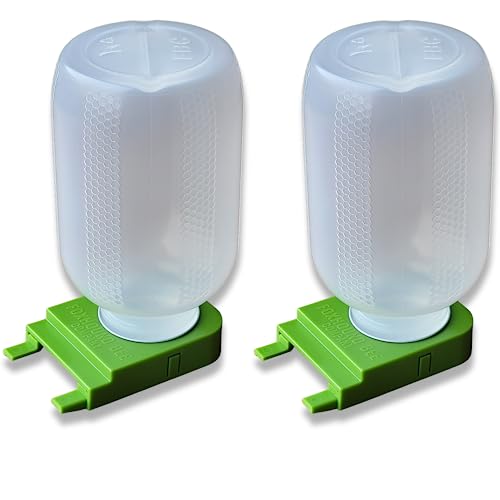
| Poultry waterer with pebbles | Fill the trough ring with small stones so bees cannot fall in | Holds a gallon or more; refills itself | Trough can grow algae; scrub it weekly |
| Dripping tap or drip emitter | Let a faucet or irrigation emitter drip slowly onto a board, stones or a sloped surface | Never runs dry; bees love the constant wet spot | Uses more water; can make mud |
| Bee-friendly birdbath | Add flat stones or a mound of pebbles so part of the bowl is only a few millimeters deep | Gardens, shared with birds | Birds foul the water; clean regularly |
Our guide to bee-friendly birdbaths has more ideas for turning a garden bath into a safe drinking spot.
Tips bees respond to
- Scent. Bees find water partly by smell, which is why they like damp soil, moss and slightly “dirty” water more than perfectly clean tap water. A pinch of salt, a bit of moss or a few damp leaves can help a new waterer get noticed.
- A rough landing surface. Wood, stone and textured edges give better grip than smooth plastic.
- Consistency. A source that is always there gets used. One that dries out on a hot afternoon sends foragers looking elsewhere.
- Keep sugar out. Do not add sugar to water sources. It attracts wasps and can start robbing.
Where to put the water source
Placement matters as much as design, especially if you keep bees near other people.
- Set it up before the bees arrive. Foragers learn their water sources early and keep going back. It is much easier to teach them your waterer on day one than to pull them off a neighbor’s pool in July.
- Keep it closer to your hives than any competing water. Bees generally use the nearest reliable source. Your waterer should sit well inside your own yard, between the hives and any pools, hot tubs or bird baths next door.
- A short distance from the hive, not in the flight path. Somewhere from a few feet to a few dozen feet away works well. Avoid putting it directly in front of the entrance, where you will be working and where heavy traffic crosses.
- Sun or part sun. Bees prefer water that is warmed by the sun, and a sunny spot lets them drink on cool mornings. In very hot climates, some afternoon shade stops a shallow dish from drying out by noon.
- Somewhere you will see it. Near a path or hose makes daily refills a habit rather than a chore.
If bees are already visiting a pool, see why bees are drawn to swimming pools and how to make a pool safer for bees. Water placement is also worth planning when you choose where to place a beehive.
Keeping it clean and mosquito-free
Bees are not fussy about clean water, but you should be. Stagnant water grows algae and bacteria, and standing water is where mosquitoes breed.
- Change or flush the water at least every few days. In warm weather mosquitoes can go from egg to adult in about a week, so replacing the water every 3–4 days breaks the cycle. Shallow dishes that bees empty daily rarely have a mosquito problem at all.
- Scrub containers weekly with a brush and plain water to remove algae and slime. Rinse well if you use any cleaner.
- Remove dead bees and debris when you refill.
- Consider moving water. A drip or small solar fountain with a pebble landing area stays fresher and is less attractive to mosquitoes.
- Keep chemicals away. Do not place waterers where garden sprays, lawn treatments or runoff can reach them.
Water for bees in winter
In cold weather bees stay clustered inside, raise little brood and fly only on mild days, so outside water use drops sharply. Much of what they need comes from condensation that forms inside the hive. Too much condensation dripping onto the cluster is a problem, though, which is why good hive ventilation matters in winter.
On warm winter afternoons bees do fly and collect water, and demand climbs again in late winter as the queen starts laying. Keep a small source available in a sunny, sheltered spot, and empty or bring in containers that could freeze and crack. A heated birdbath with stones works well in cold regions. Late winter is also the right time to re-establish your waterer before the spring buildup begins.
Frequently asked questions
How do you give bees water without them drowning?
Use a shallow container and fill it with pebbles, marbles, corks or sticks so there is always a dry landing spot at the waterline. Bees land on the stones and drink from the edges. Never leave open buckets or deep bowls of water near hives.
How far should a water source be from a beehive?
Close enough that it is the nearest reliable water, but out of the direct flight path. A few feet to a few dozen feet away is typical. Bees will fly much farther for water, but a nearby source saves forager effort and keeps them out of neighbors’ yards.
Do bees drink tap water?
Yes. Tap water is fine for bees. They often seem to prefer water with some scent or minerals, such as damp soil or slightly salty water, so a brand-new source of clean tap water may take a little time to catch on.
Can I use a chicken waterer for bees?
Yes, and it is one of the easiest options because it refills itself from the reservoir. Fill the drinking trough with small pebbles or gravel so bees cannot fall in and drown, and scrub the trough regularly to keep algae down.
Why are bees at my pool instead of the waterer?
They found the pool first, or your waterer ran dry and they switched. Bees stay loyal to sources they know. Keep your waterer full every day, place it closer to the hives than the pool, and make it more attractive with a little salt or moss. It can take a few weeks for foragers to switch.
A good water source costs almost nothing and takes a minute a day. For more on keeping colonies healthy through the seasons, browse our bee care guides.