Best Bee Feeders for Beehives: Every Type Compared
Honey Garage is reader-supported. As an Amazon Associate we earn from qualifying purchases, at no extra cost to you. Read our affiliate disclosure.
A bee feeder holds sugar syrup where your colony can reach it. You need one when a new colony is building comb, when nectar runs short, and in fall to top up winter stores. For most beekeepers the best bee feeder is a hive top feeder: it holds a lot of syrup, sits inside the hive where robbing bees cannot get at it, and refills without disturbing the colony. Frame, bucket, round and entrance feeders each suit particular jobs, and we compare them all below.
Types of bee feeders compared
| Feeder | Capacity | Robbing risk | Refill without opening hive? | Best for |
|---|---|---|---|---|
| Hive top feeder | Large (1–4 gal) | Low | Yes | Most colonies, heavy fall feeding |
| Round (rapid) feeder | Small to medium | Low | Partly; sits over the inner cover hole | Small colonies, nucs, gentle feeding |
| Frame (division board) feeder | Medium (about 1–2 gal) | Low | No | Feeding right next to the cluster |
| Bucket or pail feeder | Medium to large | Low | Needs an empty box around it | Fast feeding, low cost |
| Entrance (Boardman) feeder | Small (about 1 qt) | High | Yes | Quick checks, water, mild weather only |
| Open feeding (in the yard) | Any | Very high | Yes | Not recommended: spreads disease and robbing |
The best bee feeders
1. Mann Lake Top Hive Feeder (best hive top feeder)
A hive top feeder built into an unpainted deep wooden super, with a single-piece heavy-duty plastic reservoir that will not leak, and a galvanized steel safety screen that lets bees reach the syrup without drowning. You refill it from the top without opening the brood nest, which keeps the colony calm and robbers out.
- Good: large capacity; leakproof one-piece reservoir; refills without disturbing the bees; from a major beekeeping supplier.
- Watch for: heavy when full; paint the outside of the wooden super to protect it.
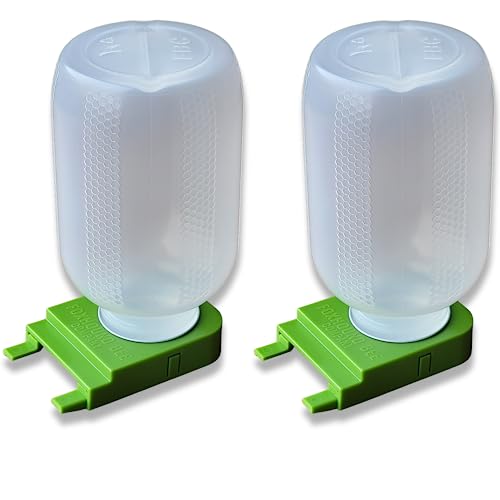
2. Aukbeefun Rapid Round Bee Feeder, 2 Pack (best round feeder)
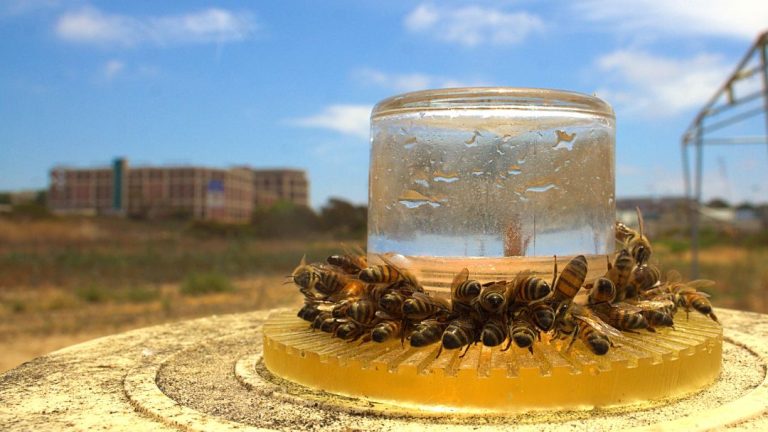
Round “rapid” feeders sit over the hole in the inner cover, inside an empty box. The bees climb up through a central cone to textured surfaces on the cone and the clear cup, so they can feed without falling in. The clear cup lets you see how much syrup is left without lifting it.
- Good: anti-drowning texture; clear cup shows the level; inexpensive two-pack.
- Watch for: smaller capacity than a hive top feeder; needs an empty box around it.
3. BeeCastle Bee Pro Frame Feeder, 6.5 L (best frame feeder)
A frame (division board) feeder takes the place of a frame inside a deep brood box, putting syrup right next to the cluster. This one arrives assembled and holds about 6.5 liters, and it fits deep boxes only.
- Good: syrup right beside the bees, good in cool weather; no extra box needed.
- Watch for: you must open the hive to refill it; it takes the place of one frame.
4. VIVO Boardman Entrance Feeder (best entrance feeder)
A solid wooden Boardman feeder (about 6.6 × 4.5 × 1.4 in) that slides into the hive entrance and holds an inverted jar of syrup or water. You can see the level at a glance and refill it without opening the hive. Check the listing to see whether a jar is included.
- Good: quick to check and refill; ideal for water; low cost.
- Watch for: small capacity; can encourage robbing; far from the cluster in cold weather.
5. Little Giant Plastic Bucket Bee Feeder (best bucket feeder)
A pail feeder with a tight-fitting lid with small feeding holes. Fill it, turn it upside down over the hole in the inner cover, and surround it with an empty box. A small vacuum holds the syrup in while the bees drink from the holes. It is a fast, cheap way to feed a lot of syrup.
- Good: large capacity for the price; simple and reliable; secure lid.
- Watch for: needs an empty box and a careful flip to avoid drips; limited stock at the time of writing.
On a budget? A mason jar with small holes punched in the lid, inverted over the inner cover hole inside an empty box, works well. See how to make a DIY bee feeder.
When to feed your bees
- New packages and nucs, while they draw out comb on new foundation. Keep feeding until they have drawn most of the frames in the brood boxes.
- During a dearth, a summer or early fall gap when little is flowering, if the colony’s stores are low.
- In fall, to bring light colonies up to winter weight. How much depends on your climate; ask local beekeepers what a colony needs to overwinter where you live.
- In an emergency in late winter, with solid sugar (fondant, sugar bricks or a candy board), not syrup.
Do not feed syrup while honey supers are on. The bees will store the syrup in the supers, and it ends up in your honey. For the full picture, see an introduction to feeding bees.
How to make sugar syrup for bees
| Season | Ratio (sugar : water) | Why |
|---|---|---|
| Spring and summer | 1 : 1 by weight or volume | Mimics nectar; stimulates brood rearing and comb building |
| Fall | 2 : 1 | Thicker syrup is stored faster, with less water for the bees to evaporate |
| Winter | Solid sugar (fondant, candy board) | Syrup is too cold and wet for a winter cluster |
Use plain white granulated cane or beet sugar. Stir it into hot (not boiling) water until dissolved, and let it cool before feeding. Never feed brown sugar, raw or organic sugar, molasses, or powdered sugar, which contains cornstarch; all of these can give bees dysentery. Never feed honey from another apiary or the store, which can spread American foulbrood spores. See installing a candy board for winter feeding and pollen patties for protein.
Tips for feeding without problems
- Prevent robbing. Feed inside the hive, never spill syrup, fill feeders in the evening and reduce the entrance of weak colonies.
- Prevent drowning. Use feeders with screens, floats or textured ladders, and add a few twigs or straws to open containers.
- Keep syrup fresh. In hot weather syrup can ferment or grow mold within days. Give the colony only what it can take in a few days, and clean feeders between batches.
- Feed every colony in the apiary at the same time, so strong hives are not tempted to rob weak ones.
Frequently asked questions
What is the best type of bee feeder?
For most beekeepers, a hive top feeder. It holds the most syrup, is protected from robbers, and refills without opening the brood nest. Frame feeders are a good alternative in a single-box hive.
Are entrance feeders bad?
Not bad, but limited. They sit outside the hive, so they attract robbing bees and wasps. They are also far from the cluster in cool weather and small, so they need frequent refilling. They are best for water or light feeding in mild weather.
How often should I refill a bee feeder?
Check every few days. A strong colony can empty a large feeder in a day or two in fall, while a small nuc may take a week. Replace any syrup that smells sour or looks cloudy.
Can I use a bee feeder for water?
Yes, entrance feeders in particular work well for water. Bees also need a reliable water source outside the hive, especially in summer; see why bees need clean water.
Setting up your first hive? See our beehive starter kit guide, as some kits include a feeder, and how to prepare beehives for winter.