Best Ventilated Bee Jackets for Beekeeping (2026)
Honey Garage is reader-supported. As an Amazon Associate we earn from qualifying purchases, at no extra cost to you. Read our affiliate disclosure.
A bee jacket covers you from the top of your head to your waist, with the veil zipped on. It is the favorite protective gear of many experienced beekeepers: cooler than a full suit, and quick to pull on for a ten-minute check. The best choice for most people is a three-layer ventilated jacket, which stops stings as well as a heavy suit while letting air flow through. Wear it with jeans or work trousers tucked into boots.
Our picks at a glance
- Best overall: USKEEPERS 3-Layer Ventilated Bee Jacket, with fencing and round veils
- Best with a round veil and gloves: Forest Beekeeping Supply Ventilated Jacket
- Best lightweight: Brutul Bee 3-Layer Ultralight Ventilated Jacket
- Best budget jacket with gloves: ANDES Sting Proof Bee & Wasp Jacket
Bee jackets compared
| Jacket | Fabric | Veil | Gloves |
|---|---|---|---|
| USKEEPERS 3-Layer | 3-layer ventilated mesh | Fencing + round, both detachable | No |
| Forest Beekeeping Ventilated | 3-layer with foam middle layer | Self-supporting round | Yes |
| Brutul Bee Ultralight | 3-layer ventilated mesh | Detachable fencing | No |
| ANDES Bee & Wasp | Durable woven fabric | Detachable fencing | Goatskin, included |
The 4 best bee jackets
1. USKEEPERS 3-Layer Ventilated Bee Jacket (best overall)
The jacket version of our top-rated bee suit. It uses three layers of ventilated mesh that keep stingers away from your skin while air flows through, and comes with two detachable veils, fencing and round, so you can switch for visibility or shade. It has YKK brass zippers and six deep pockets for a hive tool and phone.
- Good: excellent sting resistance; cool; two veil styles; strong zippers.
- Watch for: gloves sold separately; size up so it stays loose over your shoulders.
2. Forest Beekeeping Supply Ventilated Jacket with Gloves (best with round veil)
A three-layer ventilated jacket with a foam middle layer, a self-supporting round veil with a clear view, heavy-duty YKK brass zippers and gloves included. The round veil keeps the mesh well off your face and neck, and its brim shades your eyes on sunny days.
- Good: round veil with good visibility; gloves included; breathable three-layer build.
- Watch for: round veils catch the wind more than fencing veils.
3. Brutul Bee 3-Layer Ultralight Ventilated Jacket (best lightweight)
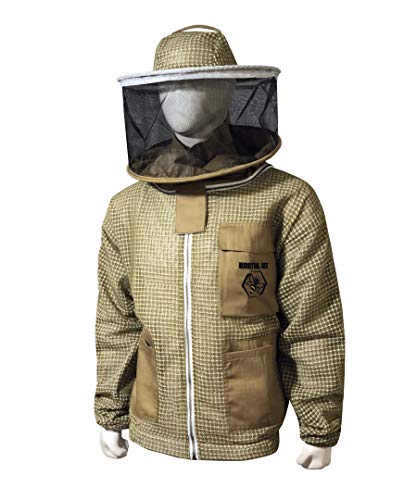
A light, fully ventilated three-layer jacket with a detachable fencing-style veil, a heavy-duty brass zipper, elasticated cuffs and waist, and thumb holds. It is quick to pull on for short inspections on hot days.
- Good: light and airy; detachable fencing veil; thumb holds keep the sleeves in place.
- Watch for: fewer extras than the USKEEPERS jacket; gloves sold separately.
4. ANDES Sting Proof Bee & Wasp Jacket with Veil and Gloves (best budget)
A complete upper-body kit: jacket, detachable fencing veil and soft goatskin gloves. High-elastic bands at the wrists, waist and glove cuffs seal out bees, and the fabric is flexible for easy movement. It is a low-cost way to get a full jacket setup.
- Good: gloves and veil included; snug elastic seals; affordable.
- Watch for: single-layer fabric is warmer and less sting-resistant than three-layer mesh.
Bee jacket or full bee suit?
A jacket leaves your legs covered only by your own trousers. Bees rarely go for legs when you stand at the hive, but they can sting through thin fabric, and they will climb up a loose trouser leg. A jacket is a good choice when:
- your colonies are calm and you know their temperament;
- the job is quick: feeding, a brief look under the lid, adding a super;
- it is hot, and a full suit would leave you overheated and rushing.
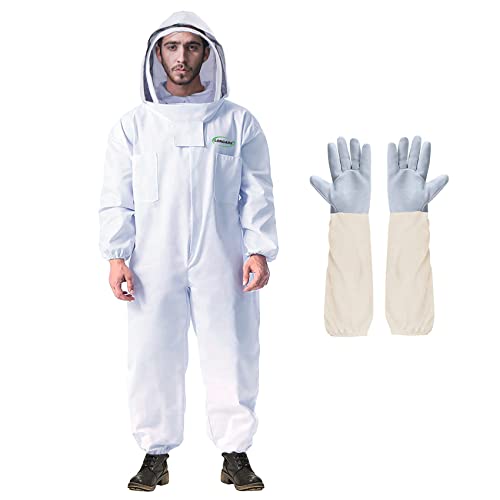
Choose a full bee suit instead if you are just starting out, if a colony is defensive, or for big jobs like splits and honey harvests, when bees are most stirred up. Many beekeepers own both.
What to look for in a bee jacket
- Three-layer ventilated fabric for hot weather. The spacer layer keeps stingers away from your skin.
- A zip-on veil, not ties. A detachable veil can be washed separately, and some jackets include both a fencing and a round veil. See the best bee veils for how the styles differ.
- A long enough hem with an elastic waist, so the jacket does not ride up when you bend over a hive.
- Elastic cuffs and thumb loops that seal over your gloves.
- A loose fit. Size up so the fabric does not stretch tight across your back and shoulders.
How to wear a bee jacket safely
- Wear thick, light-colored trousers, such as heavy jeans or canvas work pants. Avoid thin leggings.
- Tuck trouser legs into boots, or seal them with elastic boot bands or beekeeper boots.
- Wear gauntlet-style beekeeping gloves that overlap the jacket cuffs.
- Check that the veil zipper is fully closed all the way around before you open the hive.
Frequently asked questions
Is a bee jacket enough protection?
For calm colonies and short inspections, yes. Most stings target the face, hands and upper body, which a jacket, veil and gloves cover. For defensive bees or long jobs, a full suit is safer.
Are ventilated bee jackets sting-proof?
Three-layer ventilated jackets are very close to sting-proof for honey bees, because the thick spacer layer keeps stingers away from your skin. Stings can still happen where fabric presses tight, such as across the shoulders, so keep it loose.
Do bee jackets come with gloves?
Some do, such as the Forest Beekeeping and ANDES jackets above; many do not. Goatskin gloves with long cuffs are the usual choice.
How do I wash a bee jacket?
Detach the veil and hand-rinse it. Machine-wash the jacket on a gentle cycle in cool water and hang it to dry. Wash it regularly to remove the alarm pheromone that stings leave on the fabric.
For all of your protective gear, see our protective clothing guides.